United By Design: A 2025-6 MSAB Art Experience Grant
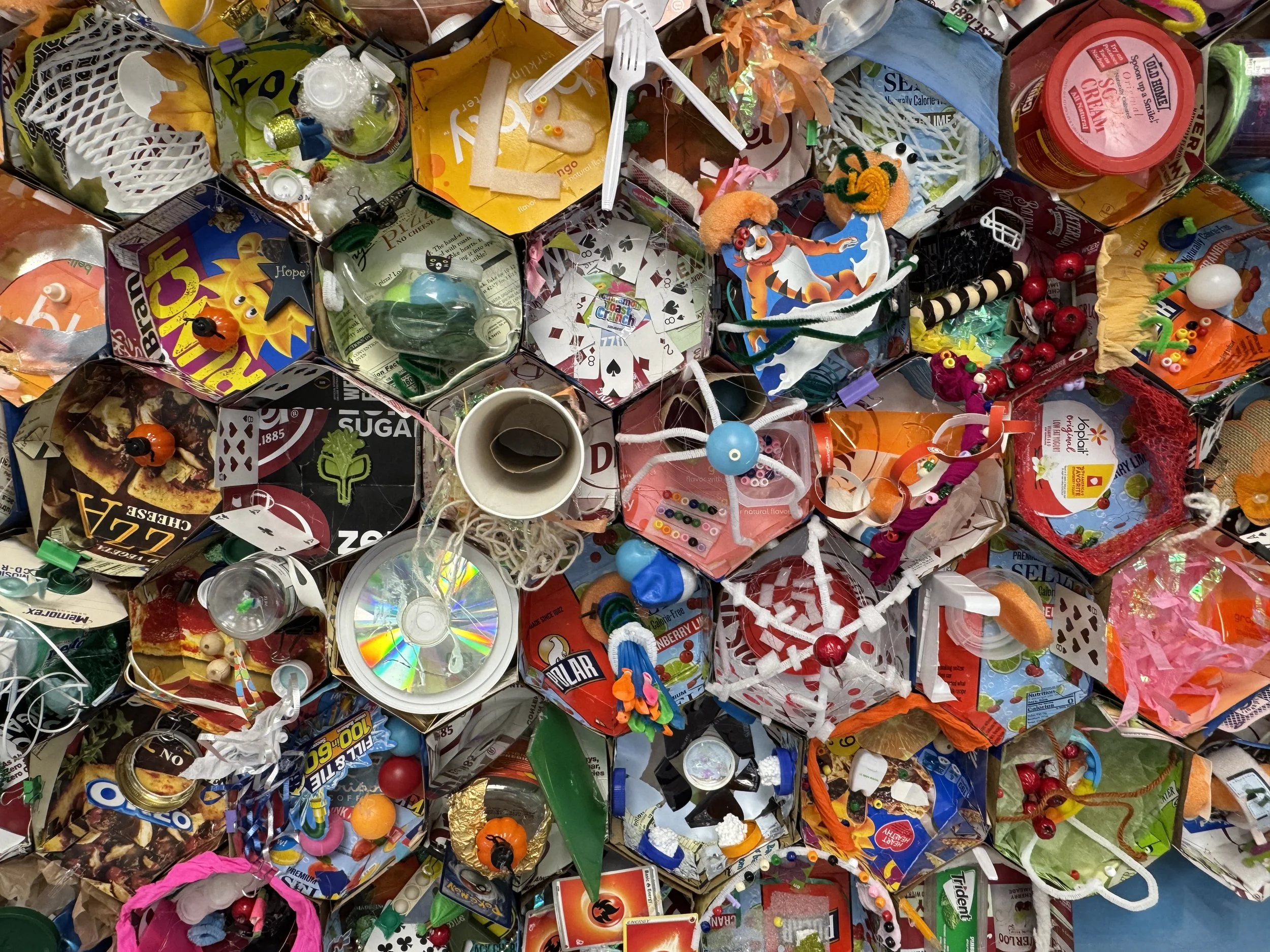
United Tessellations: 2025-6 Hennepin Version (Honey-Bee). Conserved paperboard and assorted post-consumer waste (plastic, metal, wood, fibers), 32 x 144 x 3”, 2026.
I was honored in early 2025 to be awarded a $7500 dollar Art Experience from the Minnesota State Arts Board. This grant grew out of a multi-year relationship with Hennepin Schools in Minneapolis. Since 2019 I have been collaborating with the faculty, staff and students on a series of recycled art projects. In 2024 Principal Mehmood proposed an expansion of this collaboration. To that point we had been collaborating on a single yearly project, usually focused one age group (6-8th graders in 2019, 2021 and 2022, 2-3 graders in 2024). Principal Mehmood, in collaboration with first-time dedicated grade-school art teacher Diane Anderson, proposed we spend an entire school year working on three distinct projects that would involve the entire Hennepin student body!
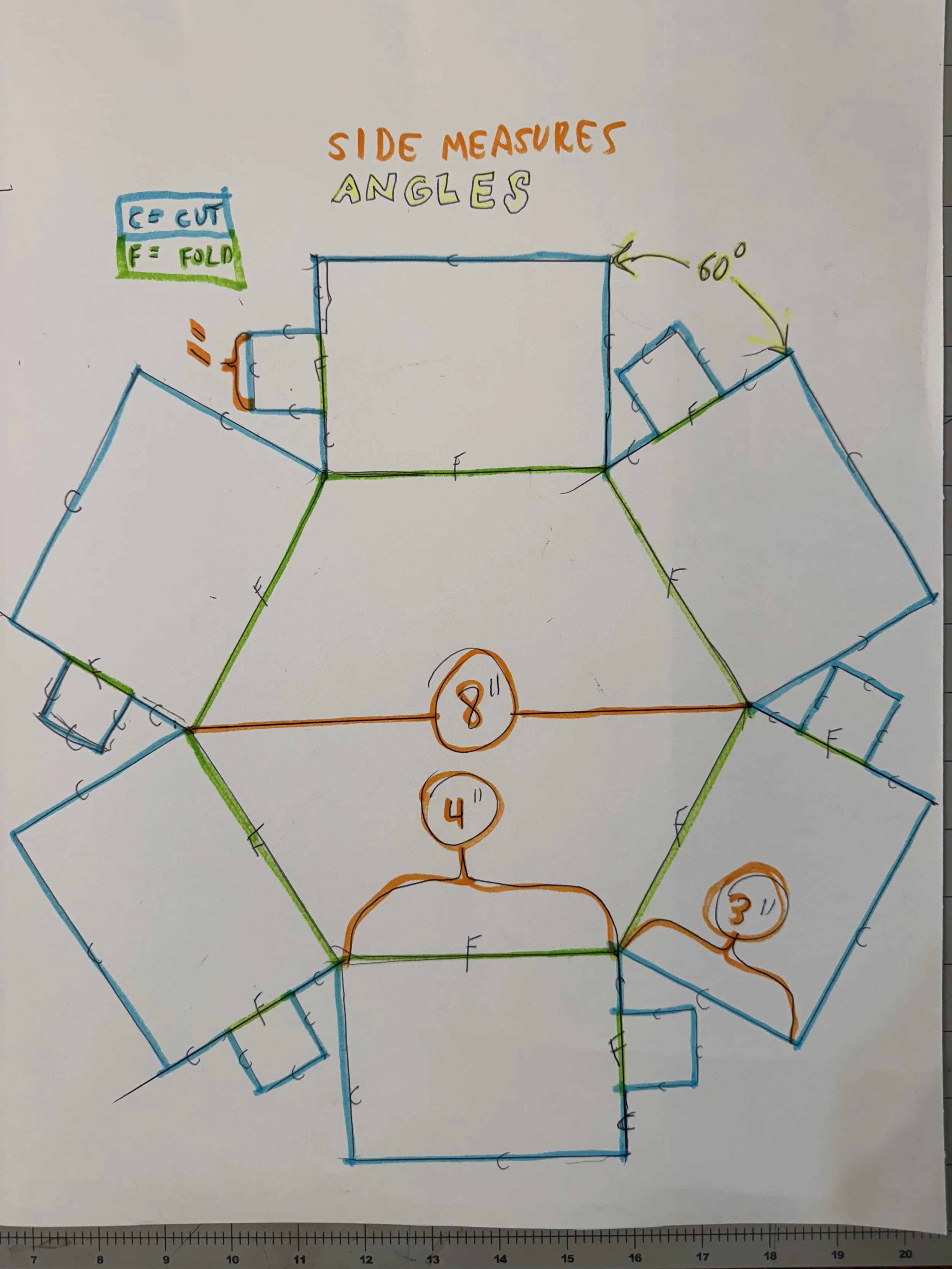
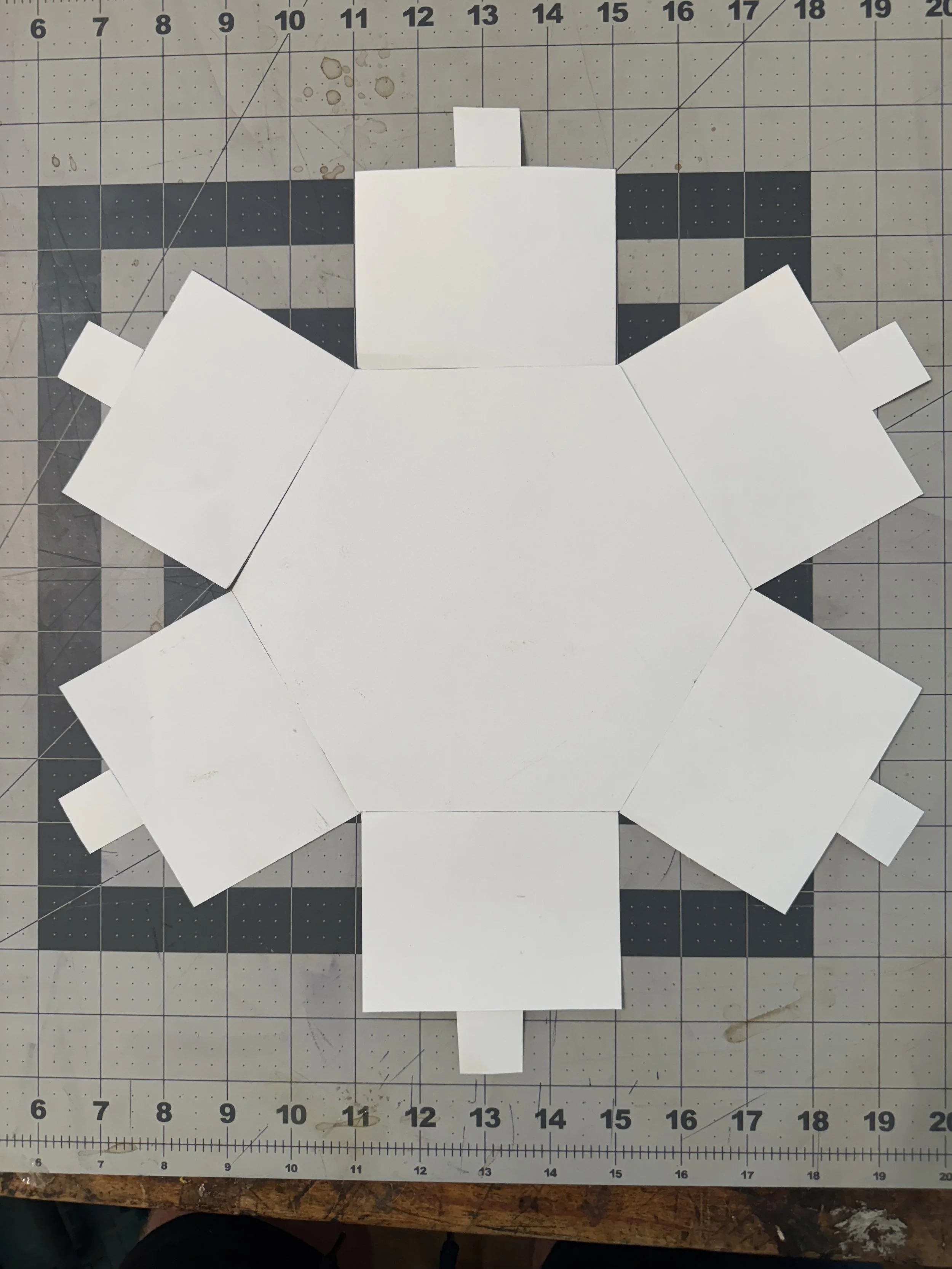
Based on my past success writing and receiving a series of State Arts Board Individual Artist grants, it fell to me to write the grant. It was an exciting new opportunity, as I had never written an Art Experience grant. Unlike an Individual Artist grant, which funds an artists personal activities and creations, the Art Experience grant focuses on creating an creative experience for a group of Minnesotans. I had some familiarity with how these grants might be assessed, having served on the panel that chose art education grants. I carefully reviewed the application criteria, created the essential design for the three projects, wrote the grant and revised it in collaboration my Hennepin peers and their needs, and submitted it. In the spring of 2025 the grant was successfully funded! The next step in the process was to begin designing the projects in detail. Arts Experience grants provide unique creative experiences: in my case, I bring reuse and recycled art making projects that are not part of a school’s normal art curriculum. We knew we wanted to begin the year with another Tessellation Project. Since 2017 I have worked with a wide range of collaborators on these patterned, wall based works. Each consists of a series of conserved paperboard packaging ‘cells’—small boxes in a shape that, when combined with other cells, creates a pattern. Collaborators build the cells, then populate their interiors with a recycled-object 3D collages. These populated cells are then hung on the wall of a space to form a large low-relief patterned mural. This would be my 4th collaboration with Hennepin students on a tessellation project, and each employed a unique pattern. For this version, we wanted to incorporate a reference to the schools two mascots—The Hornet and the Honey Bee—by using a hexagon shape that references a hive formation. I began this process as I usually do: by hand-constructing a prototype in paper, then paperboard:
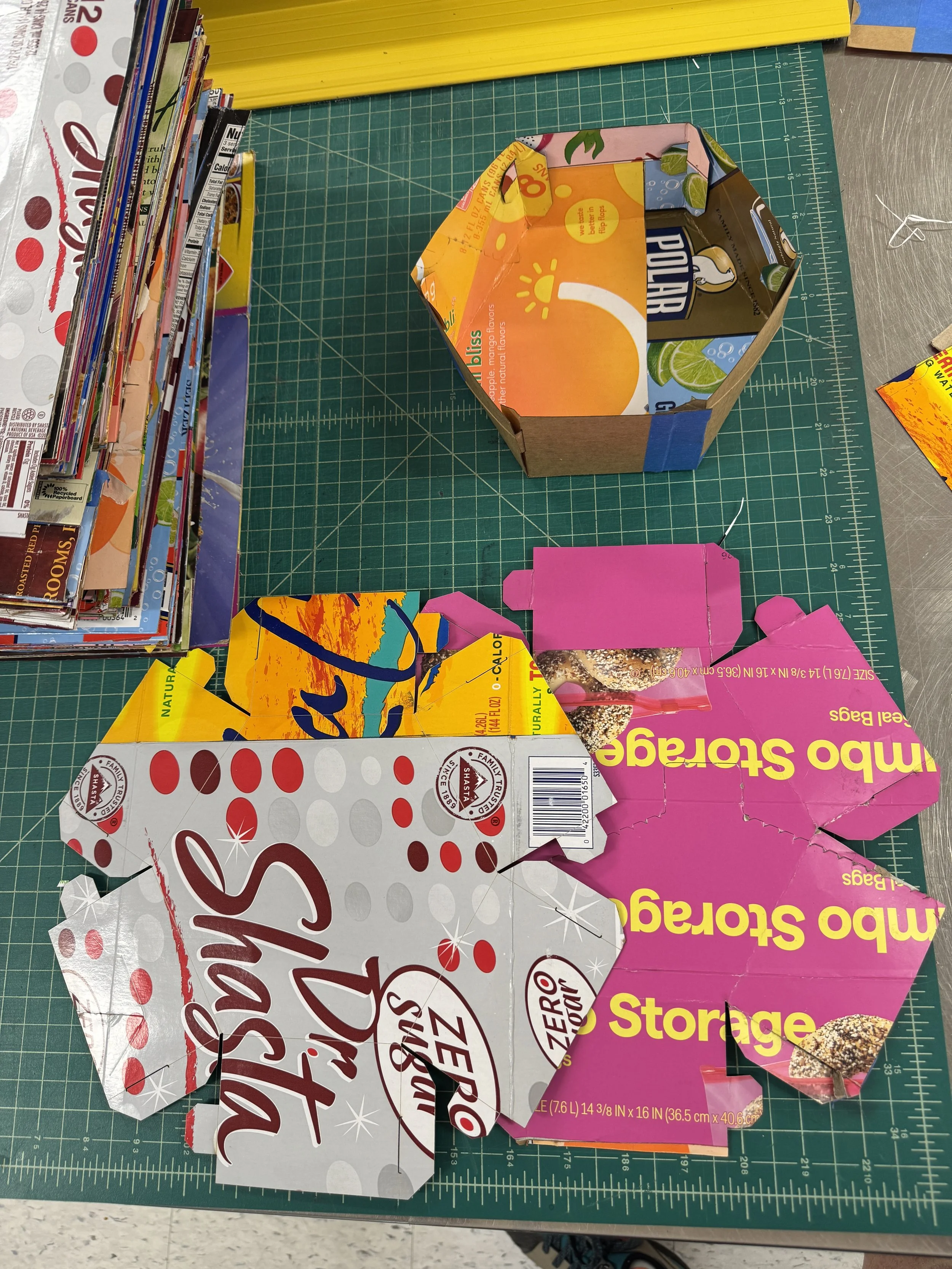
Starting with a 2024 Springboard for the Arts Rural-Urban Collaboration grant, I began refining the process of making these cells by collaborating with designers to create files that were readable and executable by a computer laser. The purpose was to design a box that was easier to cut en-masse, easier to fold, and more exact in proportions, but also incorporating score-lines and tabs that would reduce or even eliminate the need for tapes and adhesive use when building the cells. For this grant I collaborated with paper-model designer Matt Bergstrom to create cells that would employ a locking tab-and-slot system that rendered the cells constructible with folding alone. Matt used my paper prototype to create the file. I then cut the cells on the laser in the Design lab of Minnesota State University in Mankato, the university where I teach I I was provided access to the laser and help preparing it by graphic designer and professor Ellen Schofield, who further translated my file to cut to the MNSU laser’s specifications.
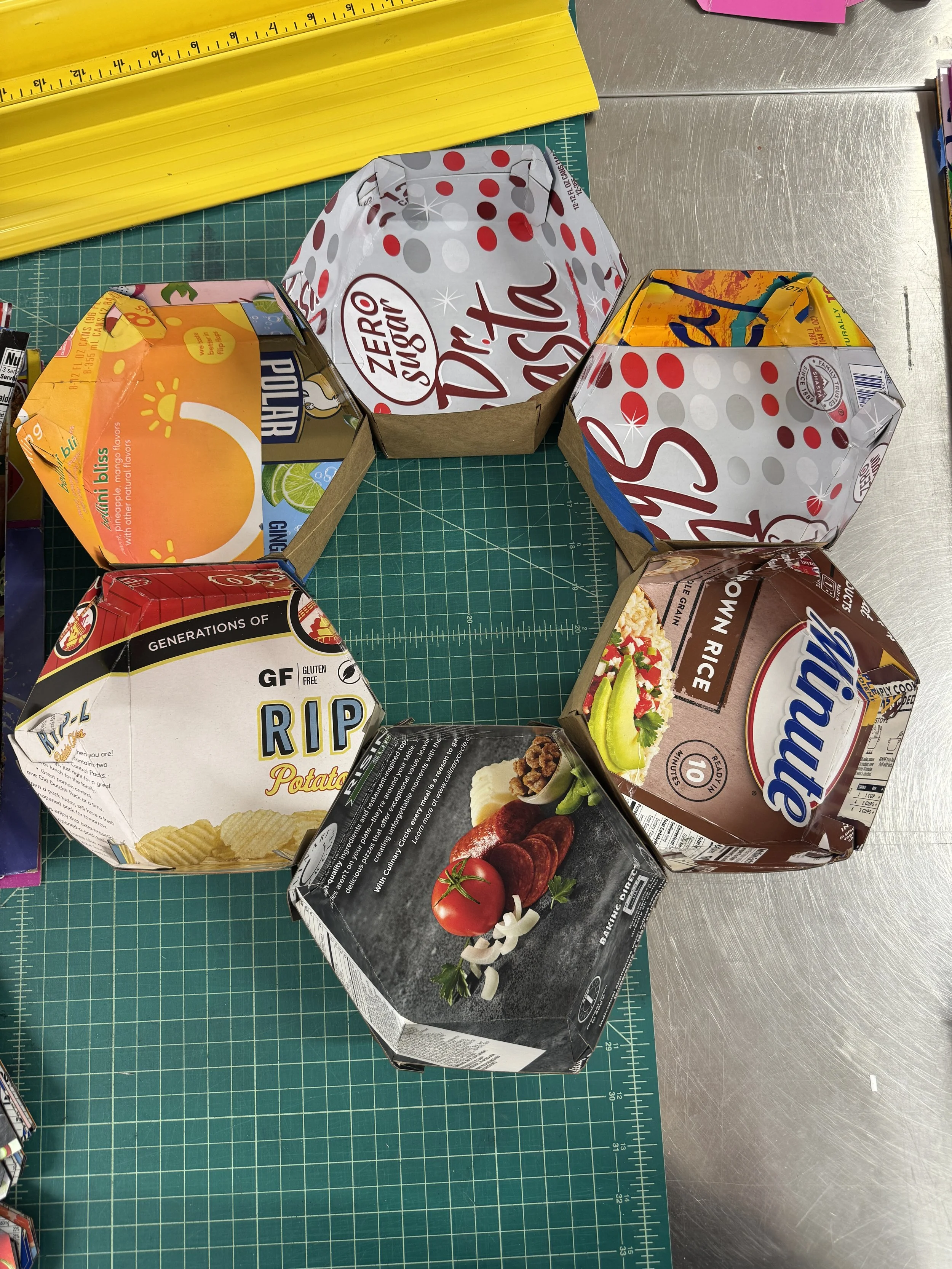
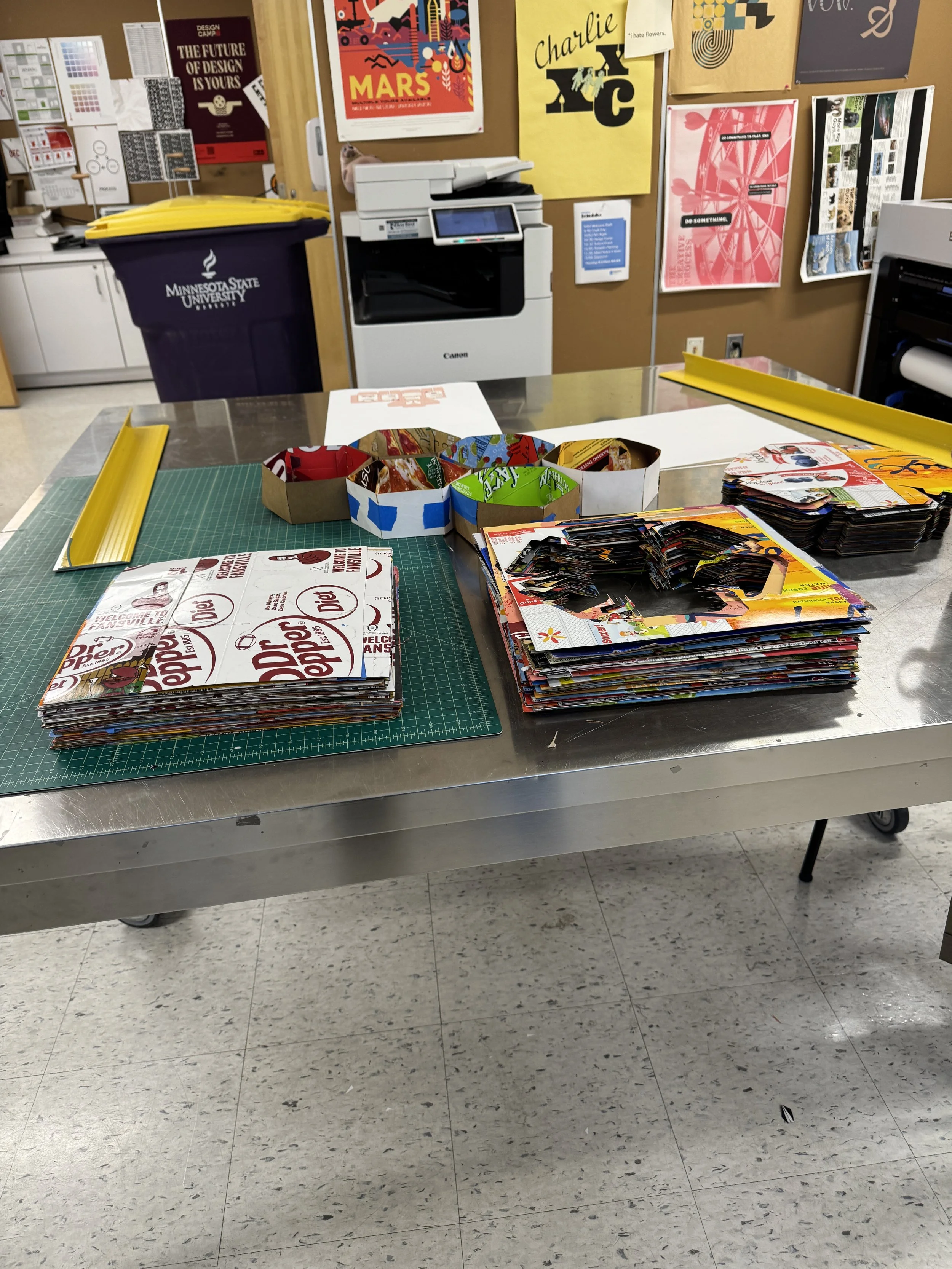
I then spent several sessions cutting enough cells for all of the 5th-8th grade students to participate: almost 300 cells!
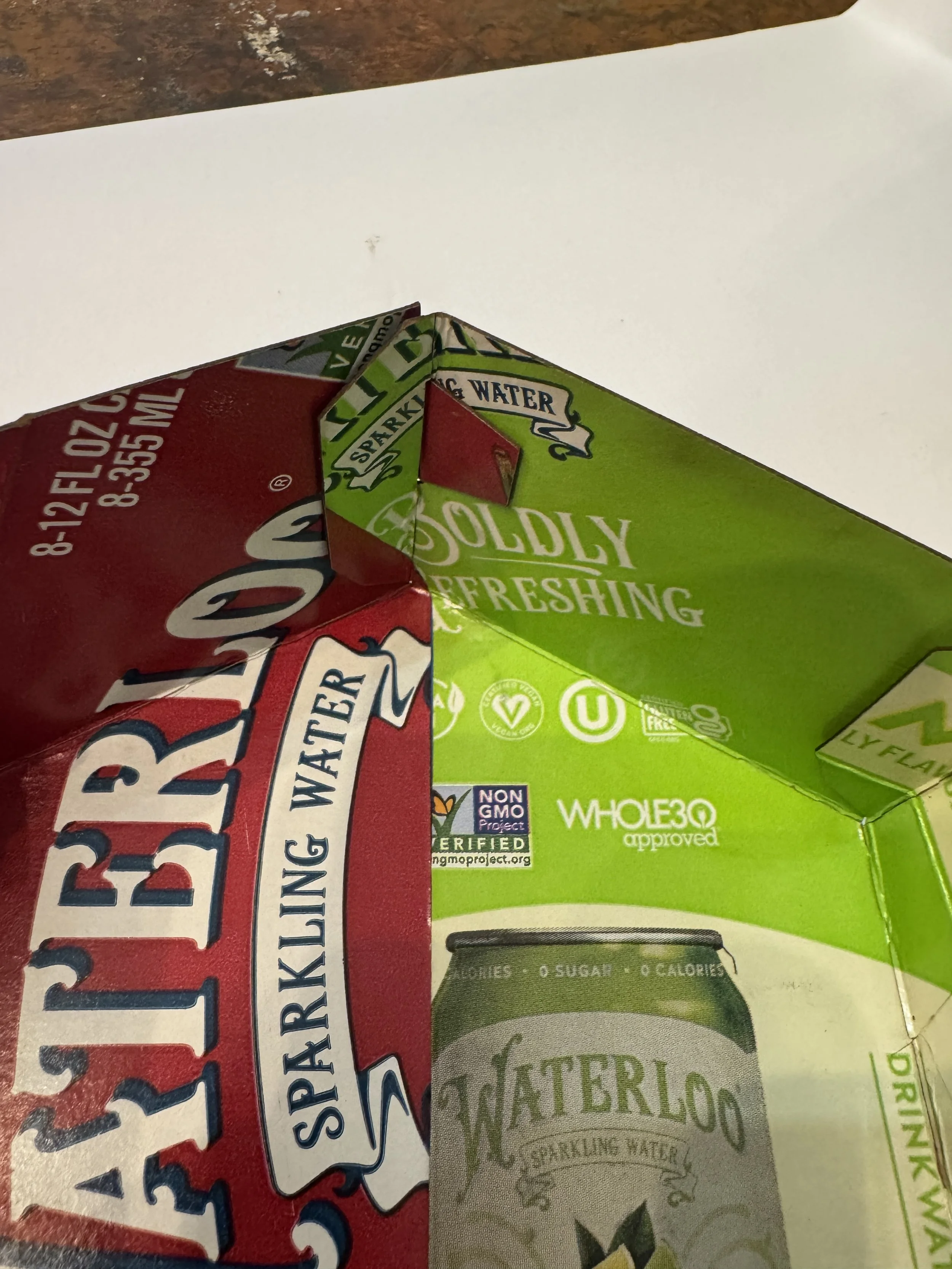
Based on text cuts, some tweaking and revising by Matt and myself were required to get a lock and tab combination that required little-to-no tape in the construction. We got as close as we could to eliminating additional waste: some masking tape was still required to cobble-together the paperboard packaging into a single, laser-cuttable sheet, and a bit more on the outside of the built cells to keep the tabs in place. This continues to be a work in progress toward a zero-added-waste design.
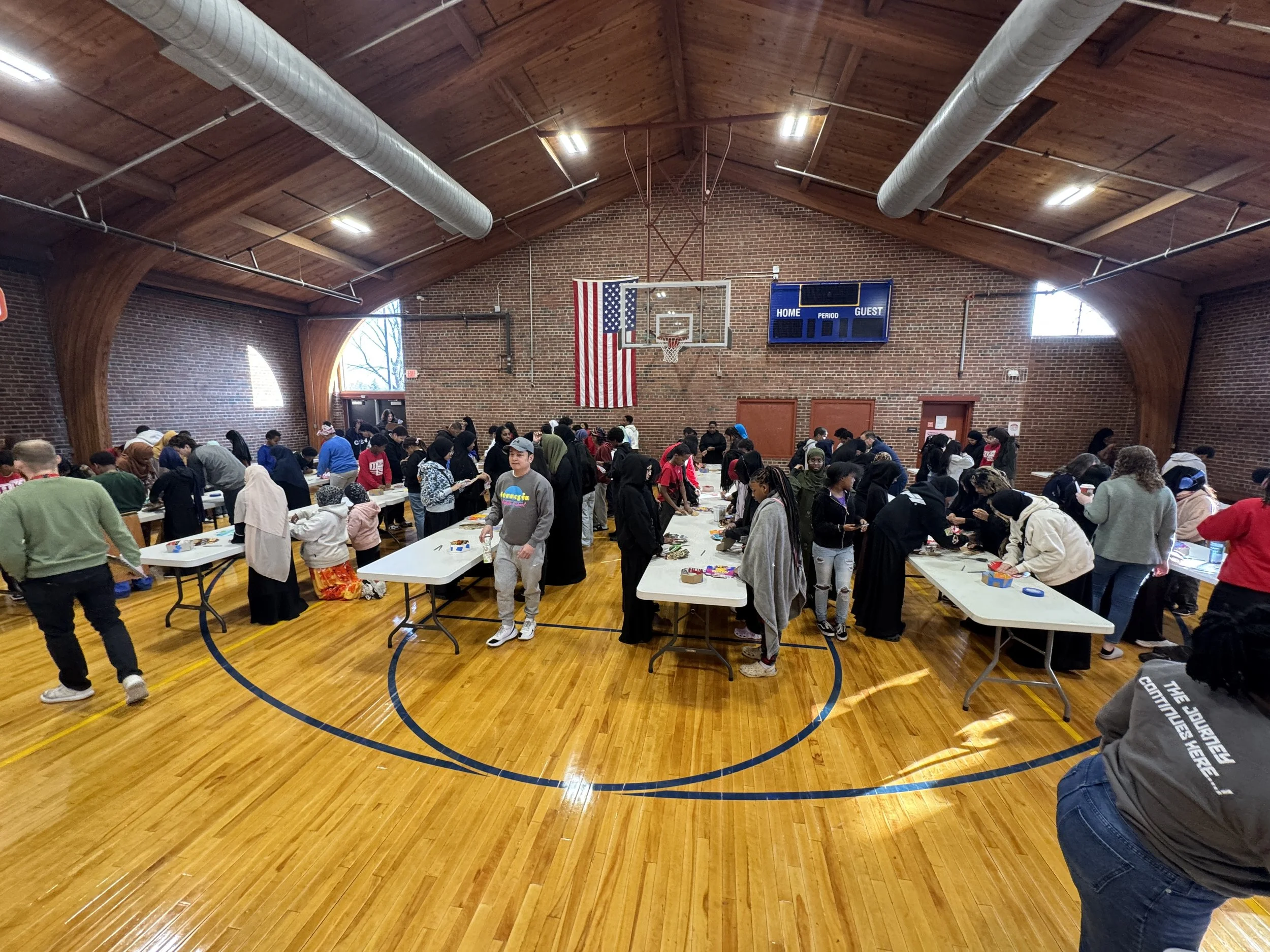
This process occupied me for much of the summer and fall of 2025. In the winter of 2025, we were finally ready to begin the building process. At an initial November session, we set up several tables in the Hennepin School gymnasium and began distributing the cells to the entire 5th-8th grade.
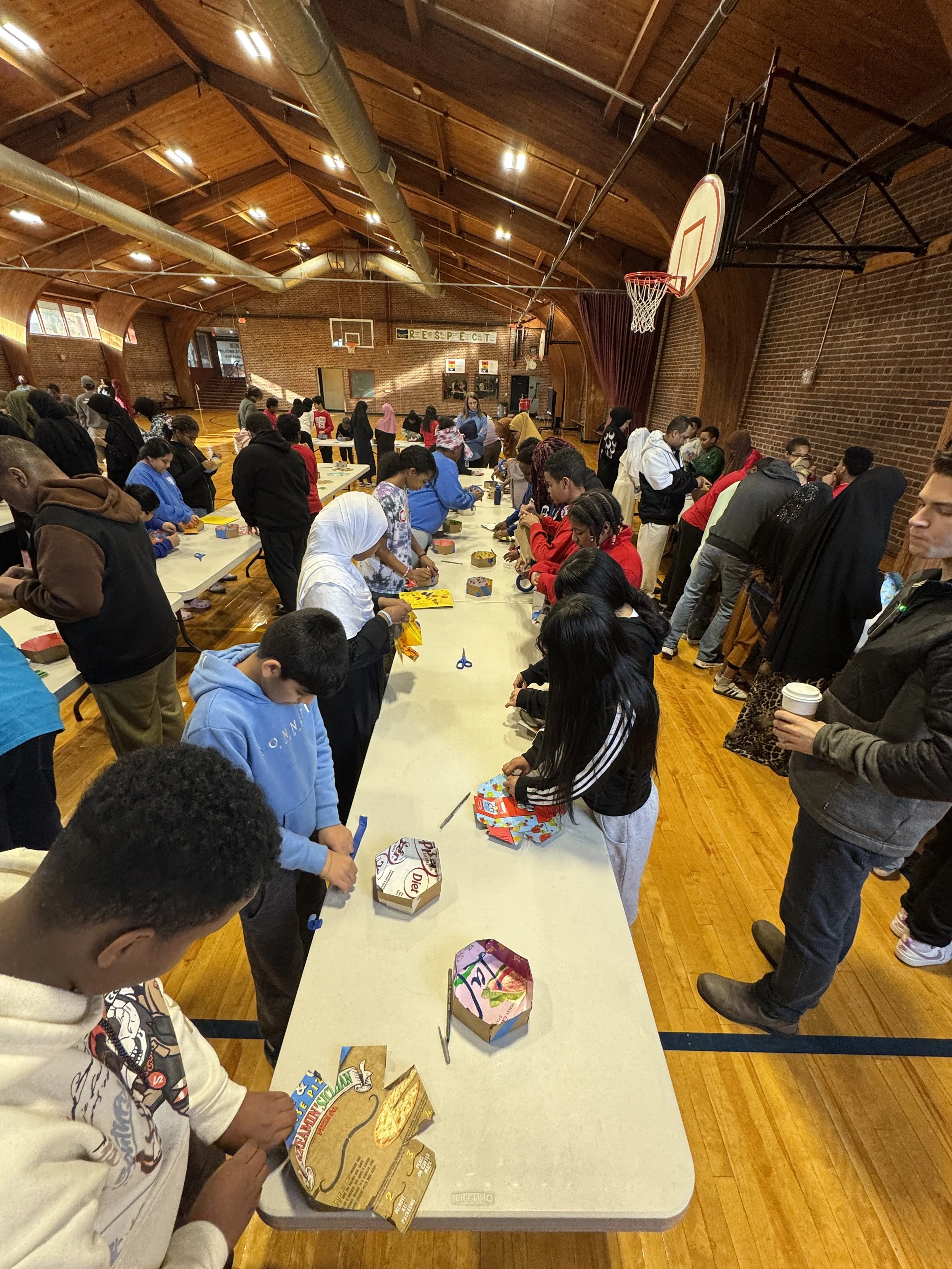
We were excited and gratified when the over-250 students easily constructed all the cells in a single one-and-a-half-hour session!
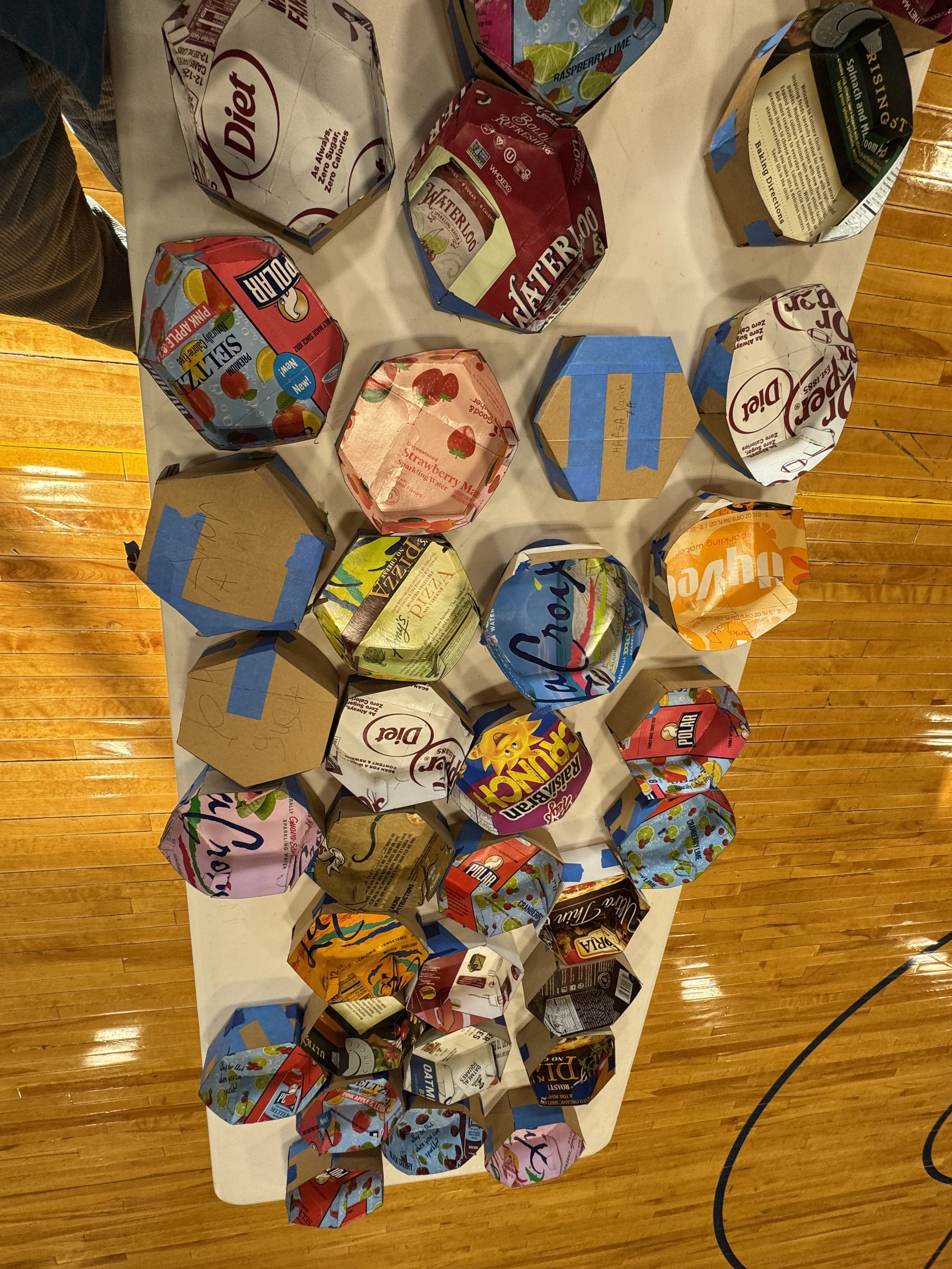
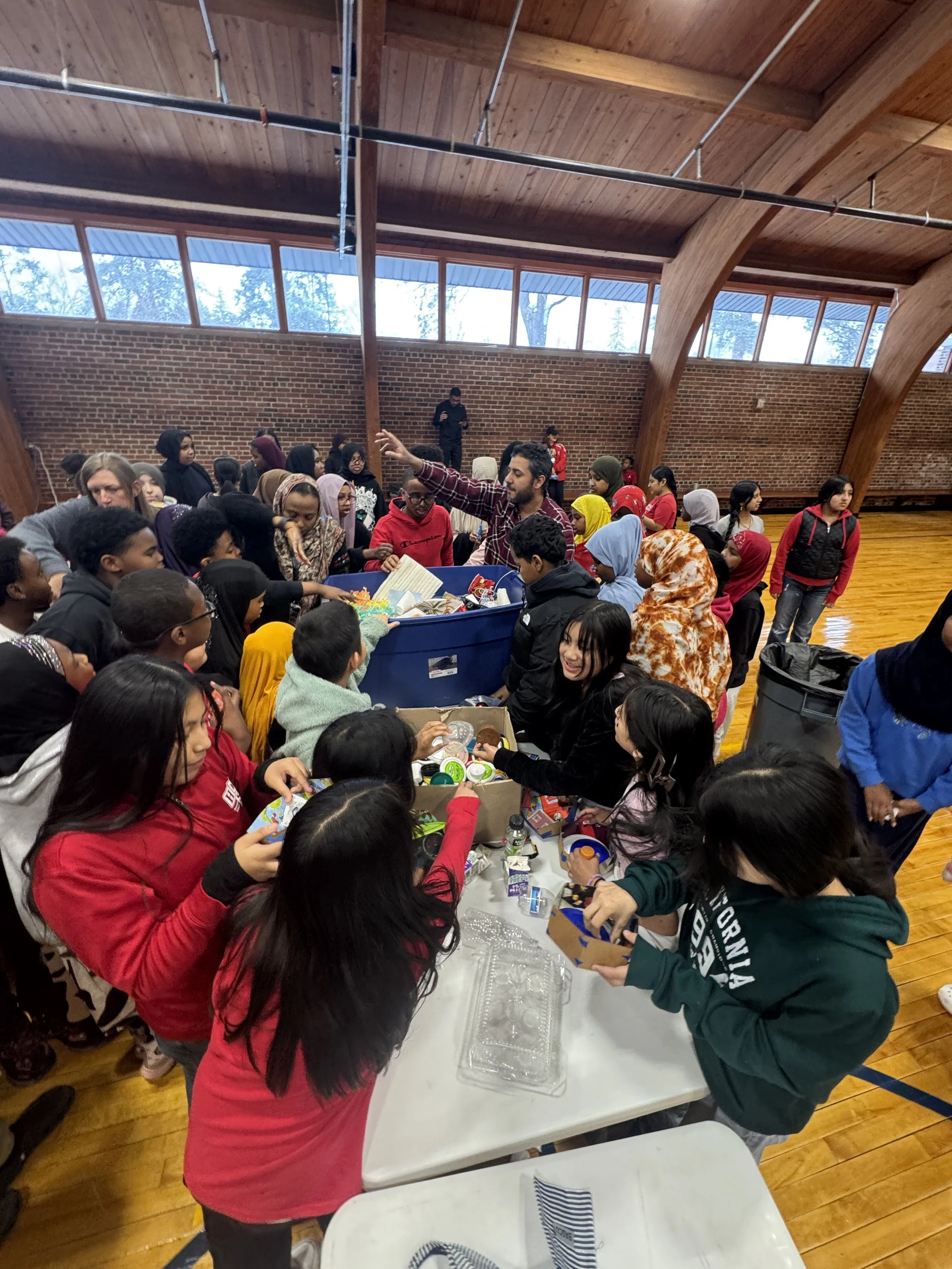
In December of 2025 we reconvened in the gym to create the interior collages. Students arrived with several boxes of post-consumer materials that they had been collecting throughout the fall. I also provided objects from my own vast store of post-consumer materials, many from my own consumption, some from previous collaborations. We negotiated the excitement and chaos of dividing up shared materials equally among students.
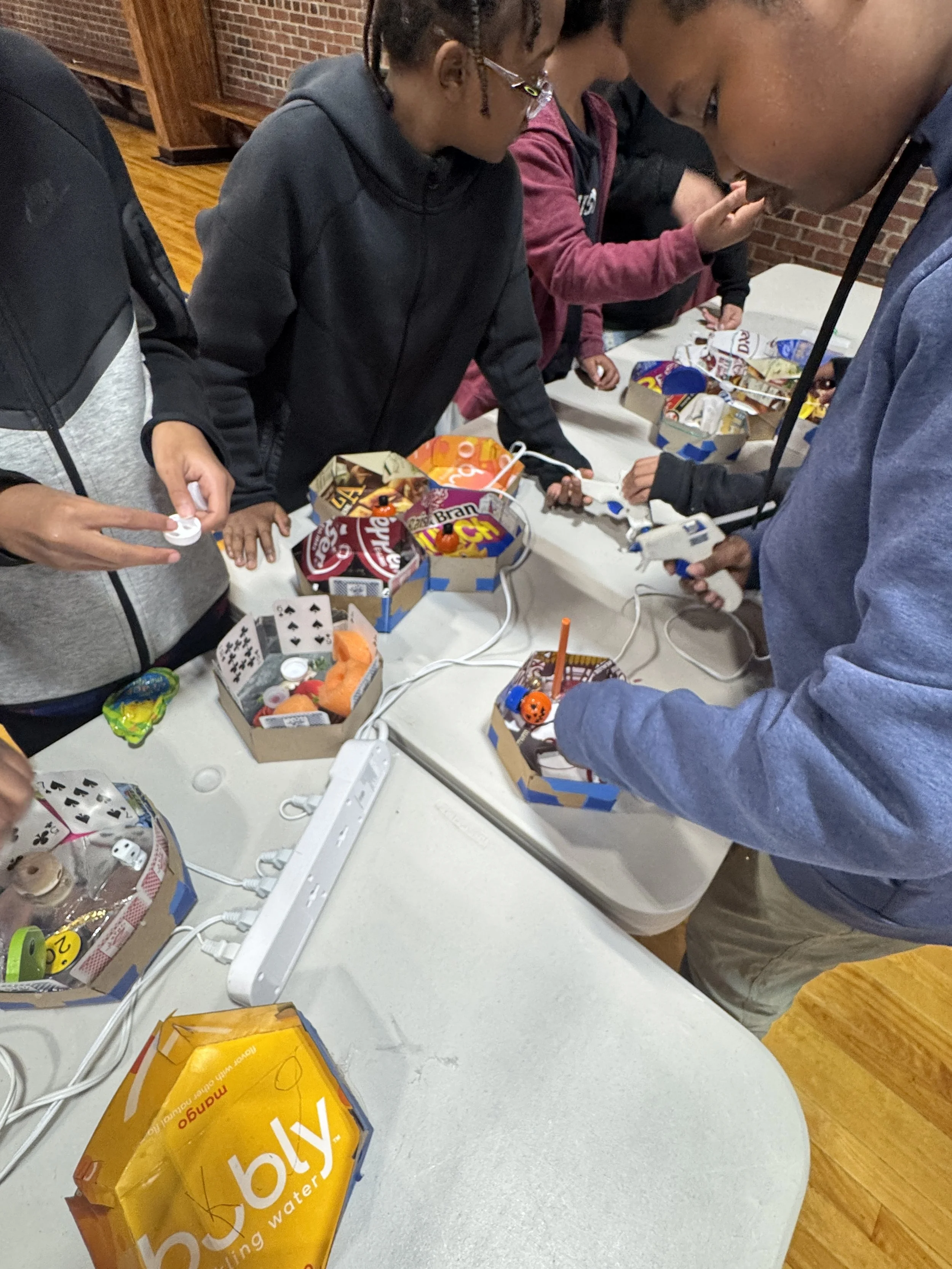
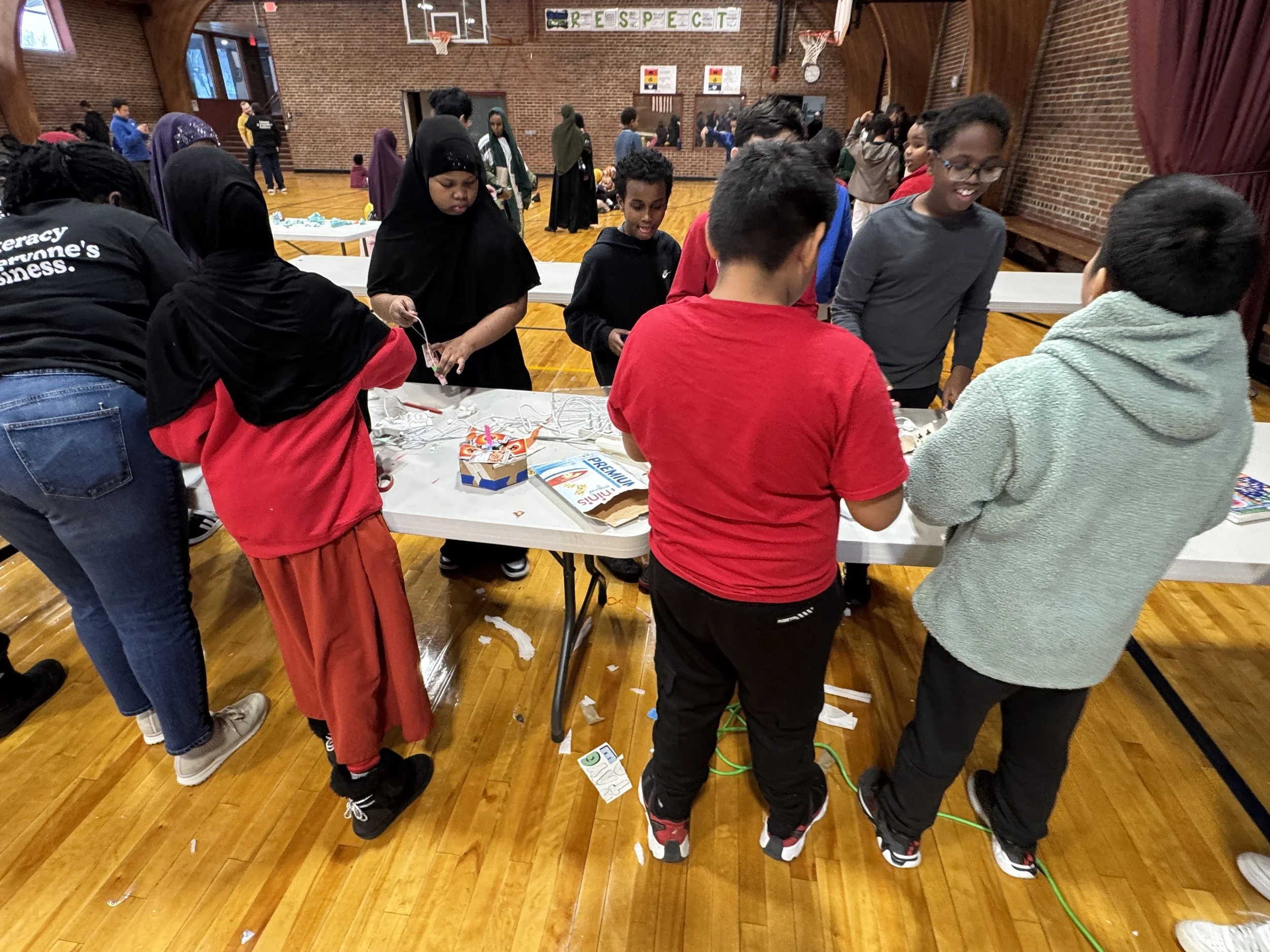
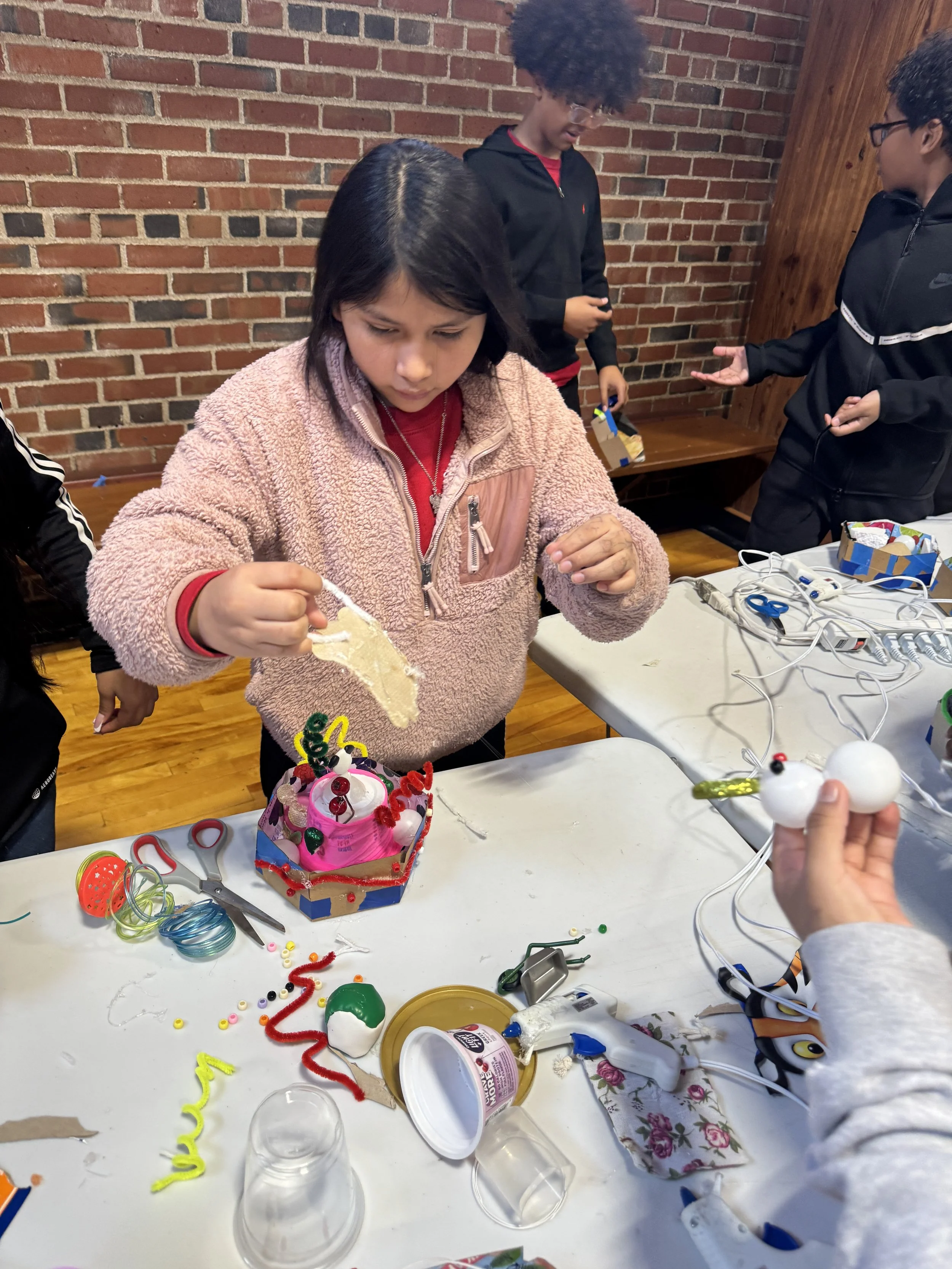
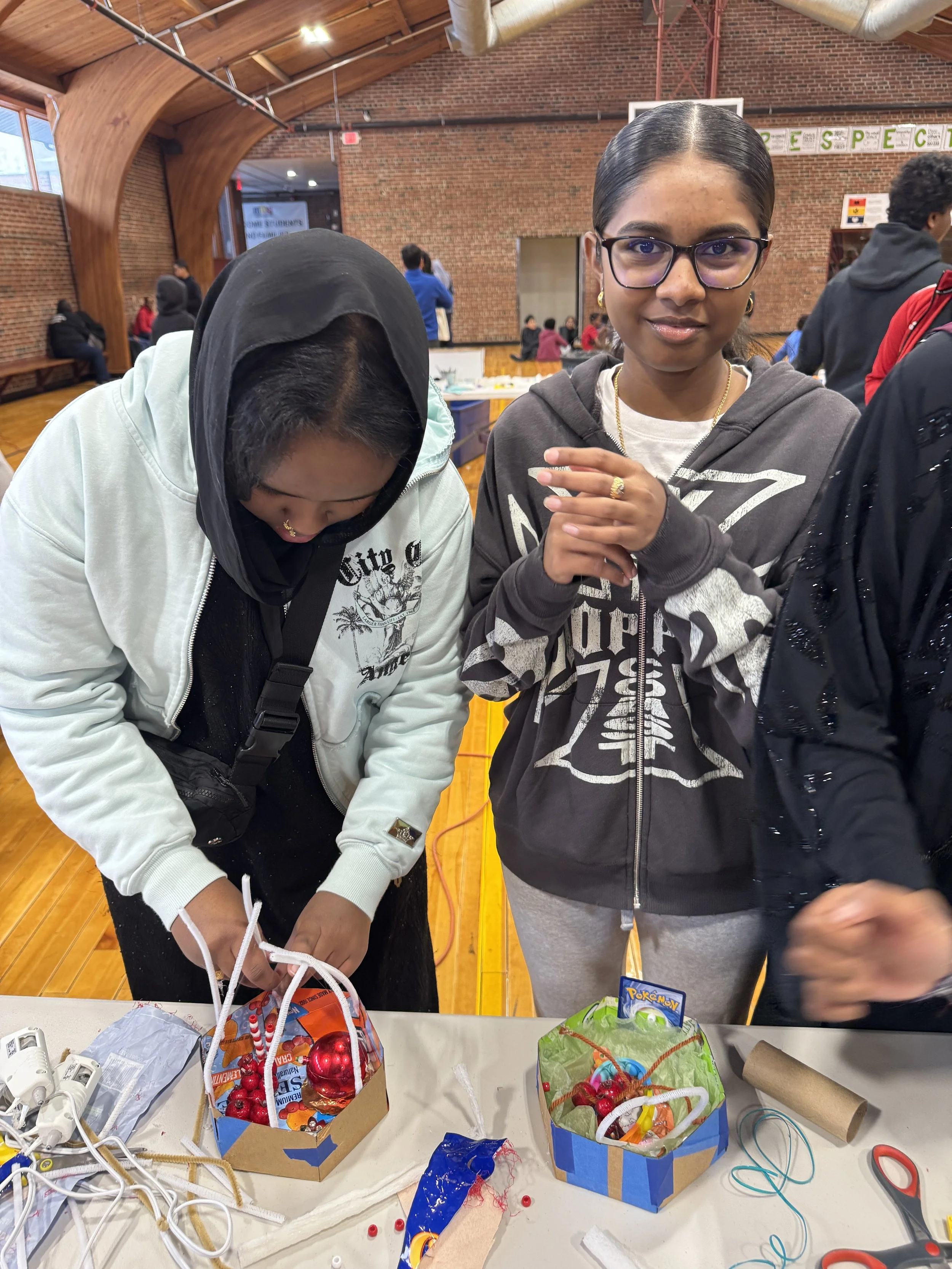
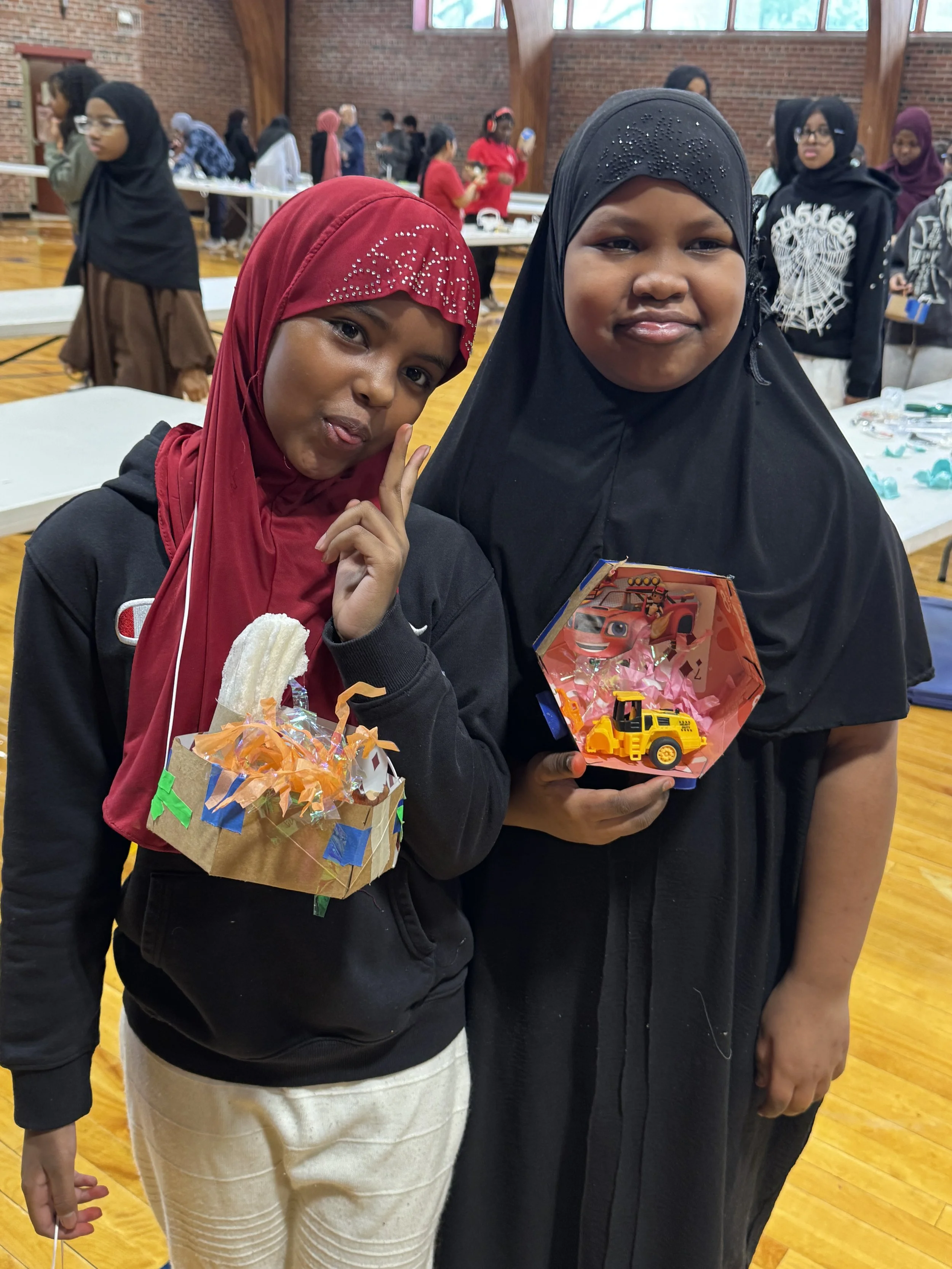
The students rose beautifully to the occasion, generously sharing materials and ideas. Students used low-heat melt-glue guns to created the collages, in the process displaying an impressive range of strategies and techniques. By the end of the day we had 270+ complex, colorful individual cells.
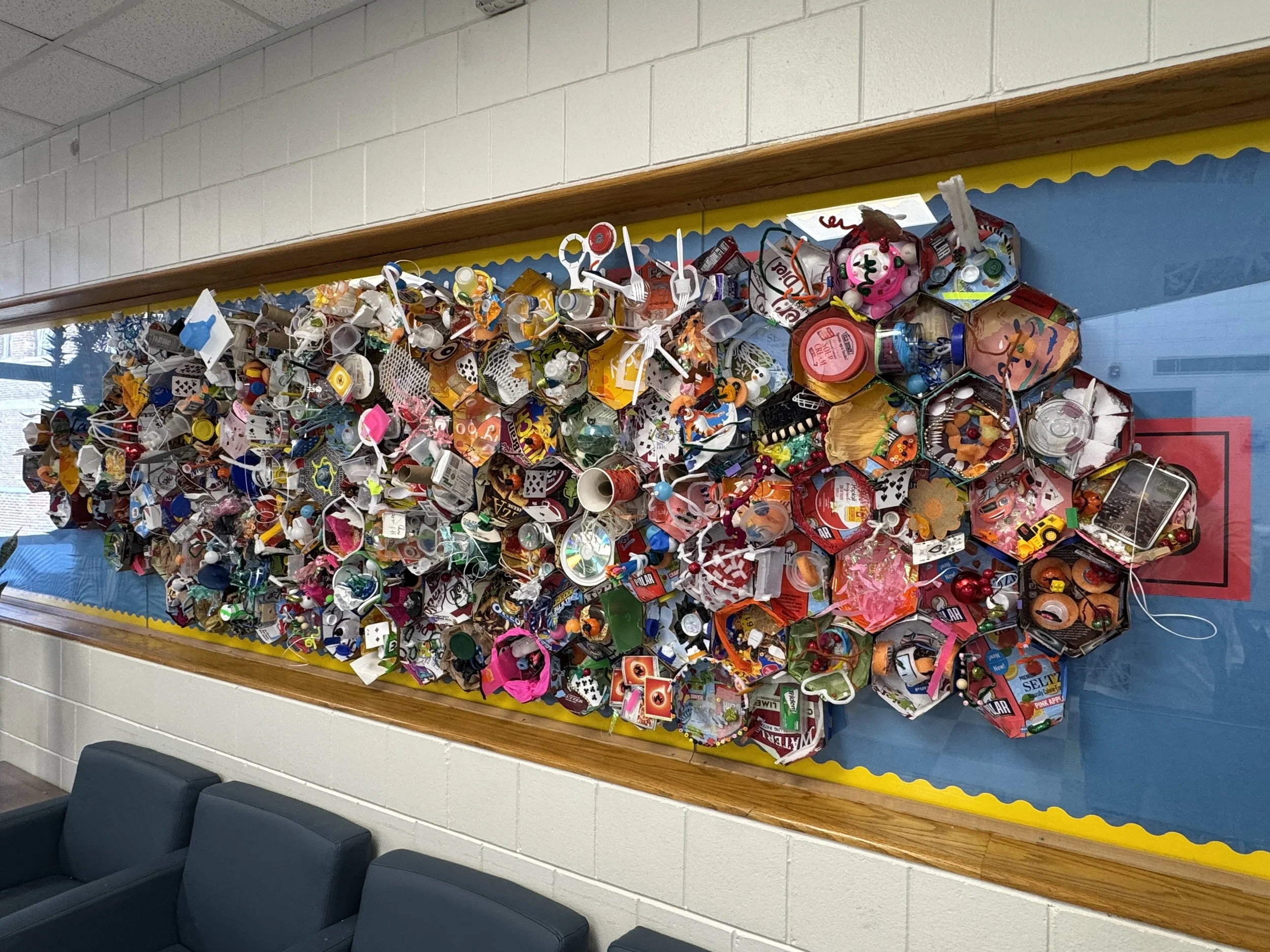
The final phase of this process was to install the piece. We had chosen a high-profile location in the main school lobby, making use of large, glass-fronted display-case as the display surface.
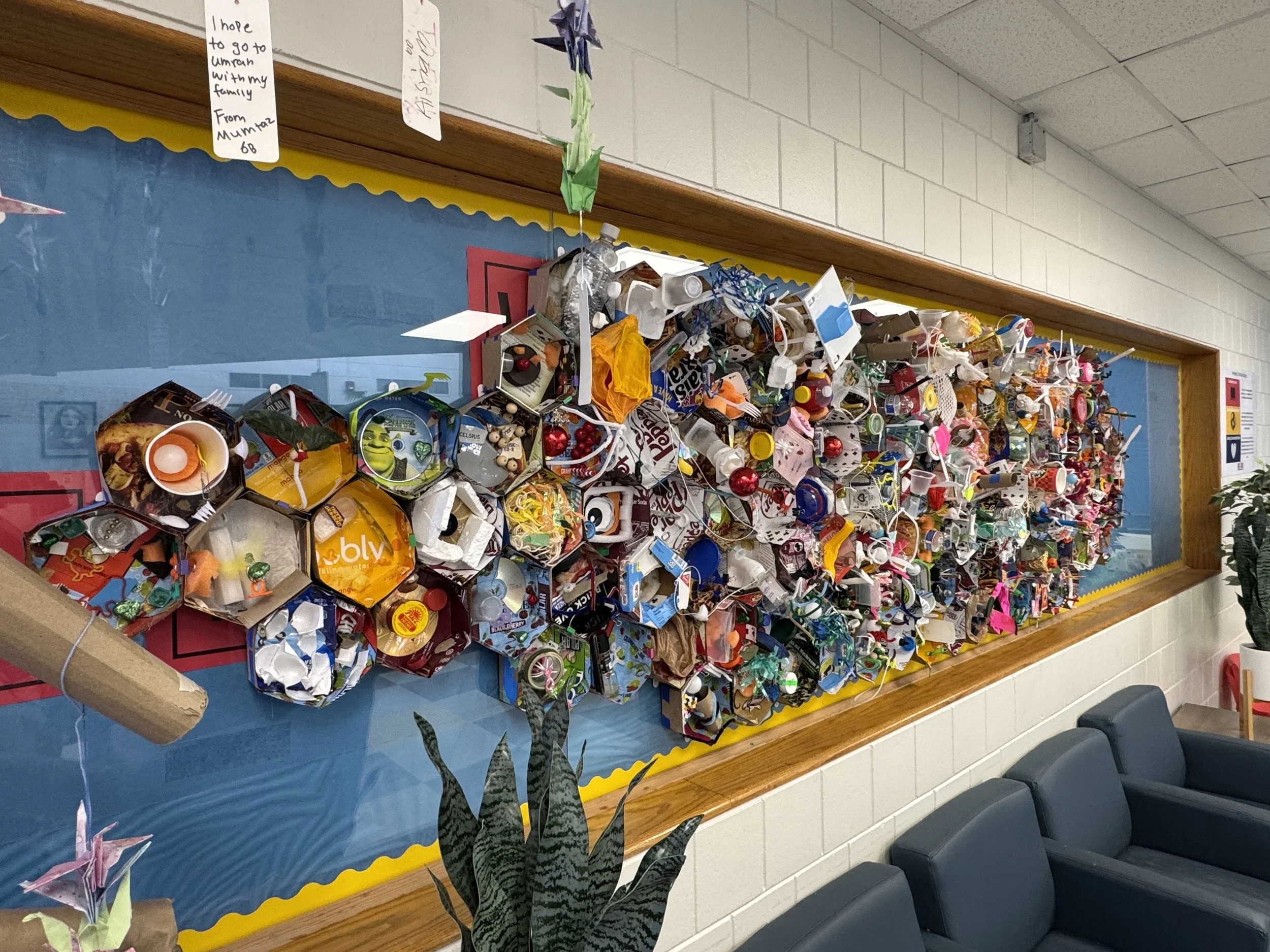
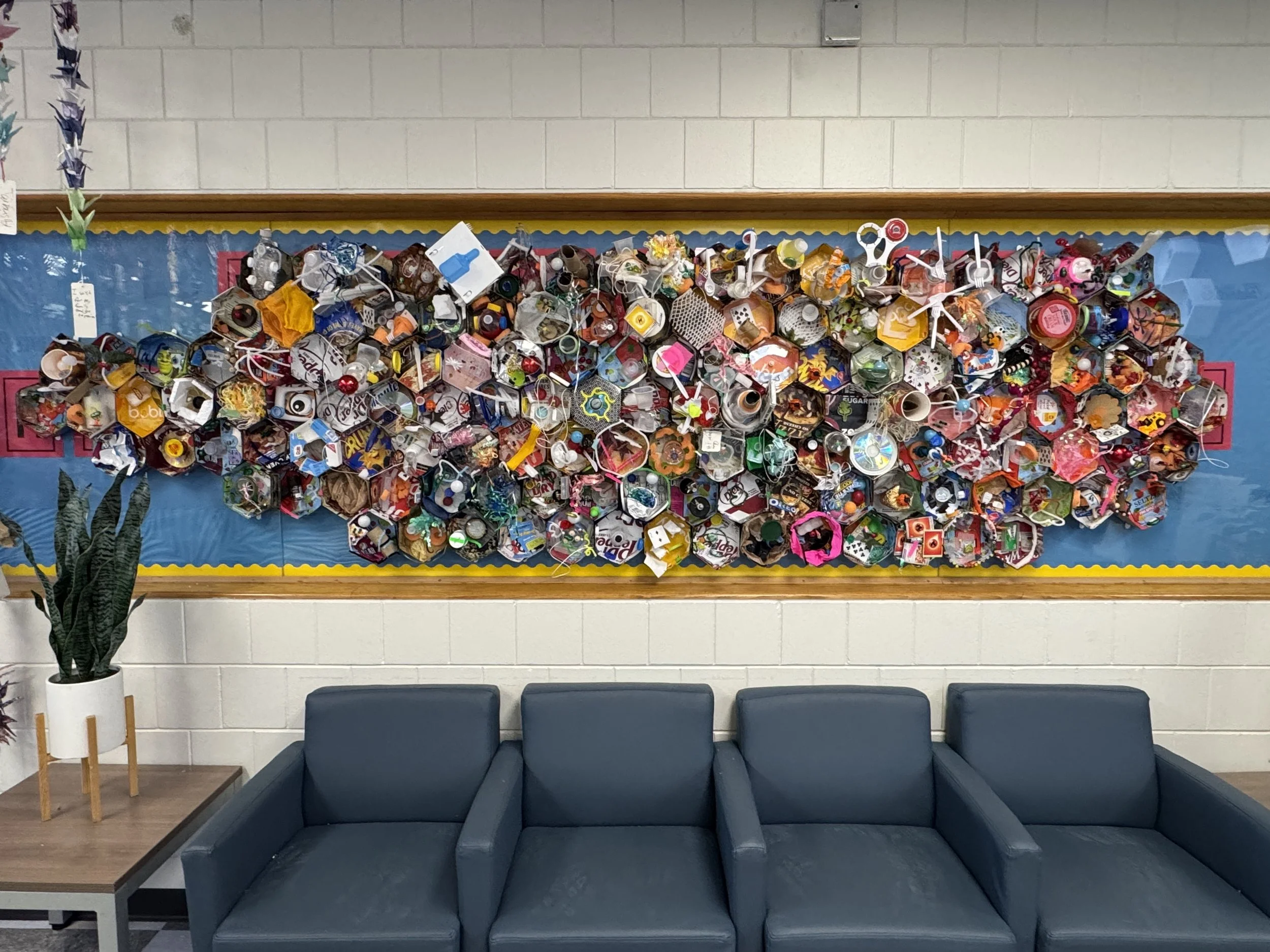
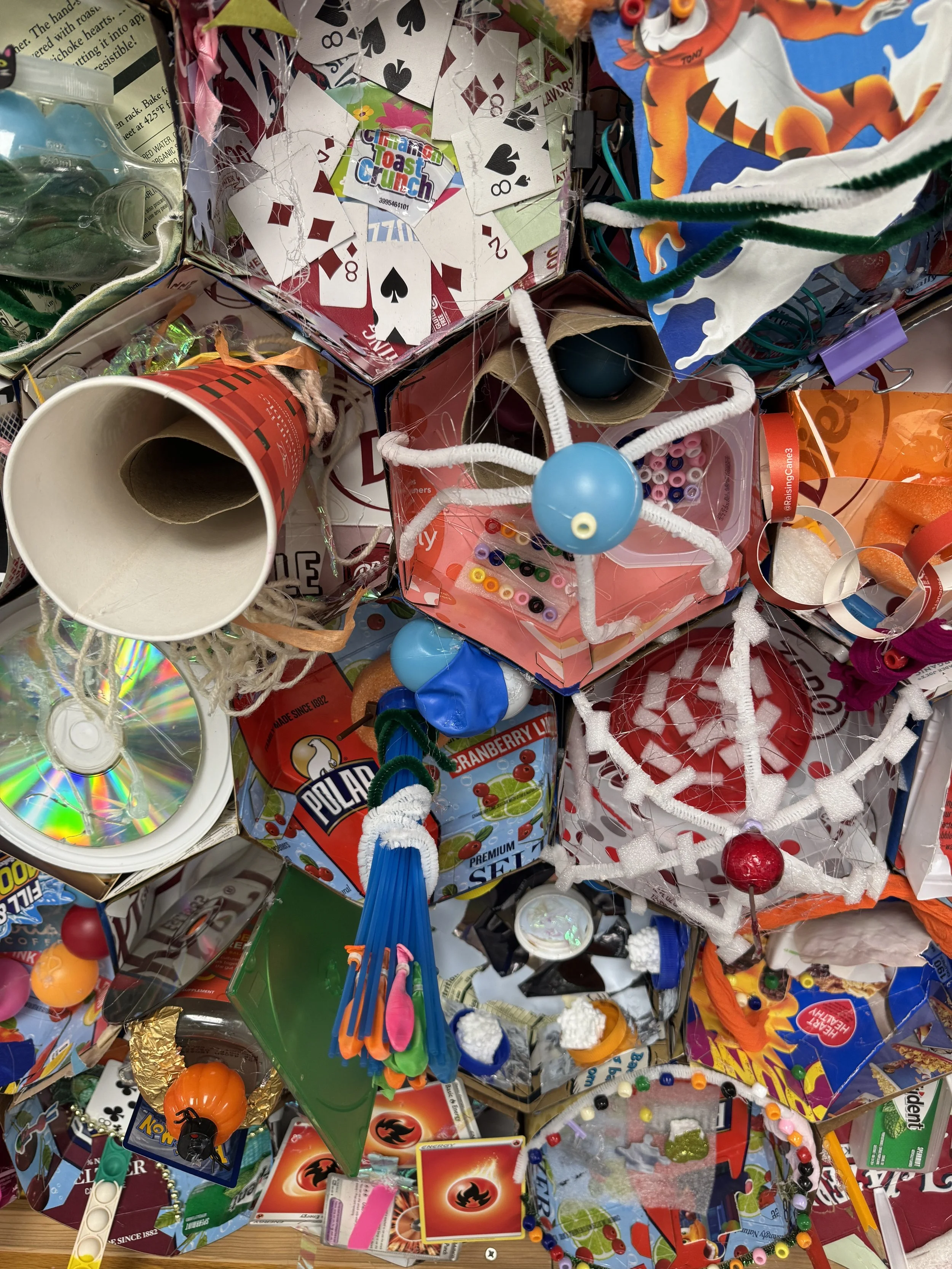
Exciting to have the piece in a place heavily traffics by students, staff and parents! This was a chance to generate excitement about the next two phases of our collaboration!
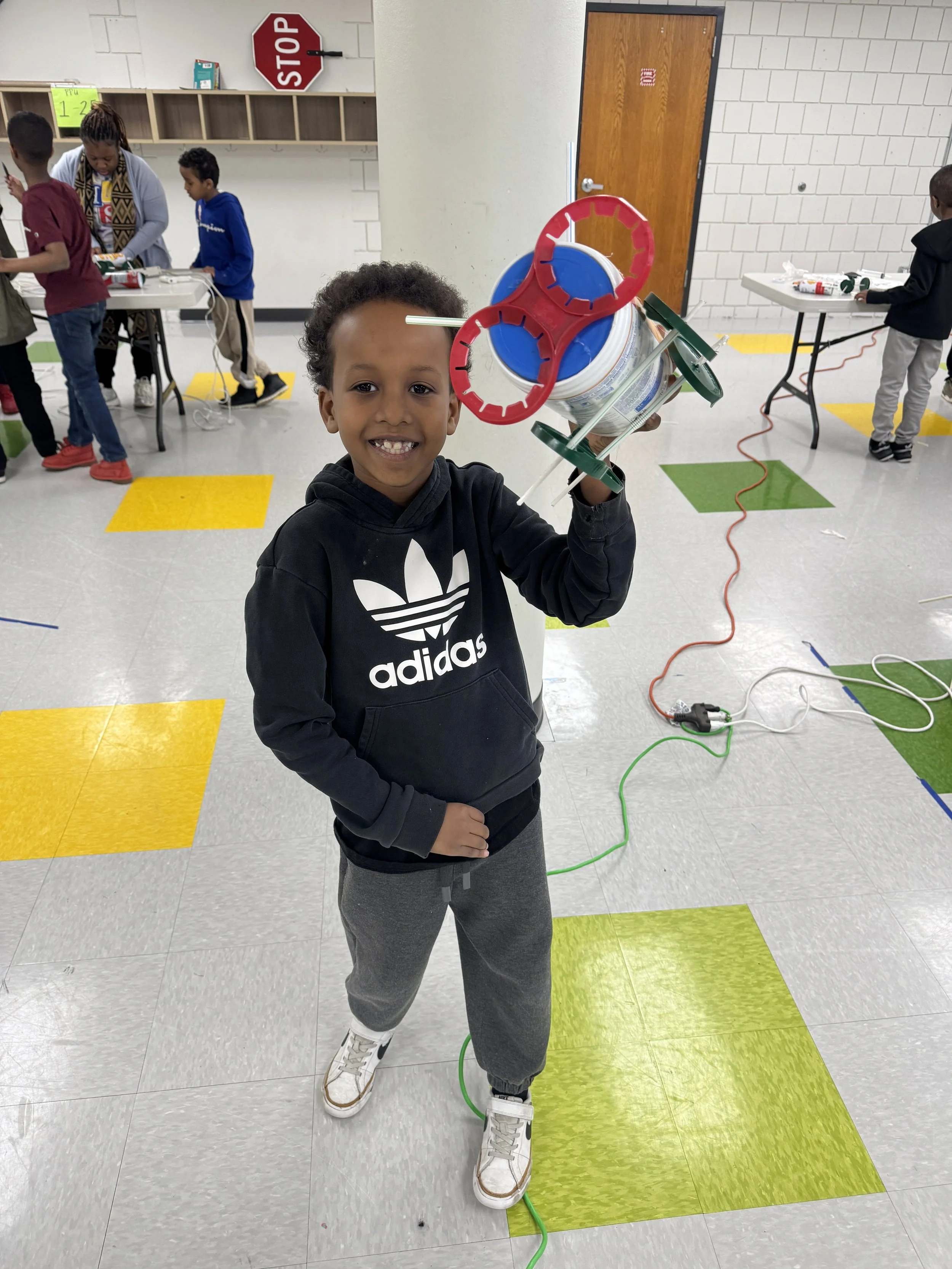
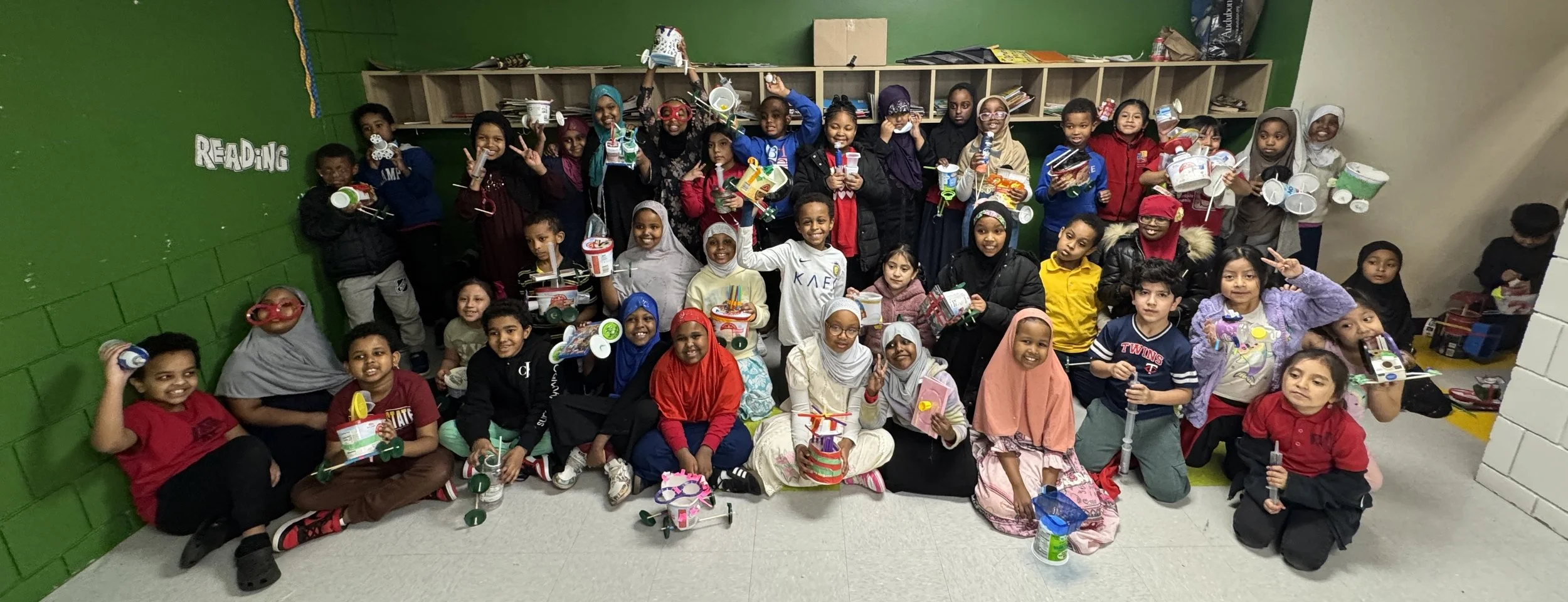
The next two phases of this collaboration involved recycled-object toy-making with the elementary students. For a long time we had been hoping to do a project with K-4 that involved individual, take home creations. We settled on recycled-object toy-making: a popular make-and-take project I devised over twenty years ago. I have worked with grade school students several times on this project over the years, mostly with the elementary students at Northside in St. James MN, but it has been several years since I last conducted a session and I was excited to return to it and refine the process for this group. We began with the third graders. We had worked together in 2024 on the Springboard collage project, and they were excited to make something they could take home that day!
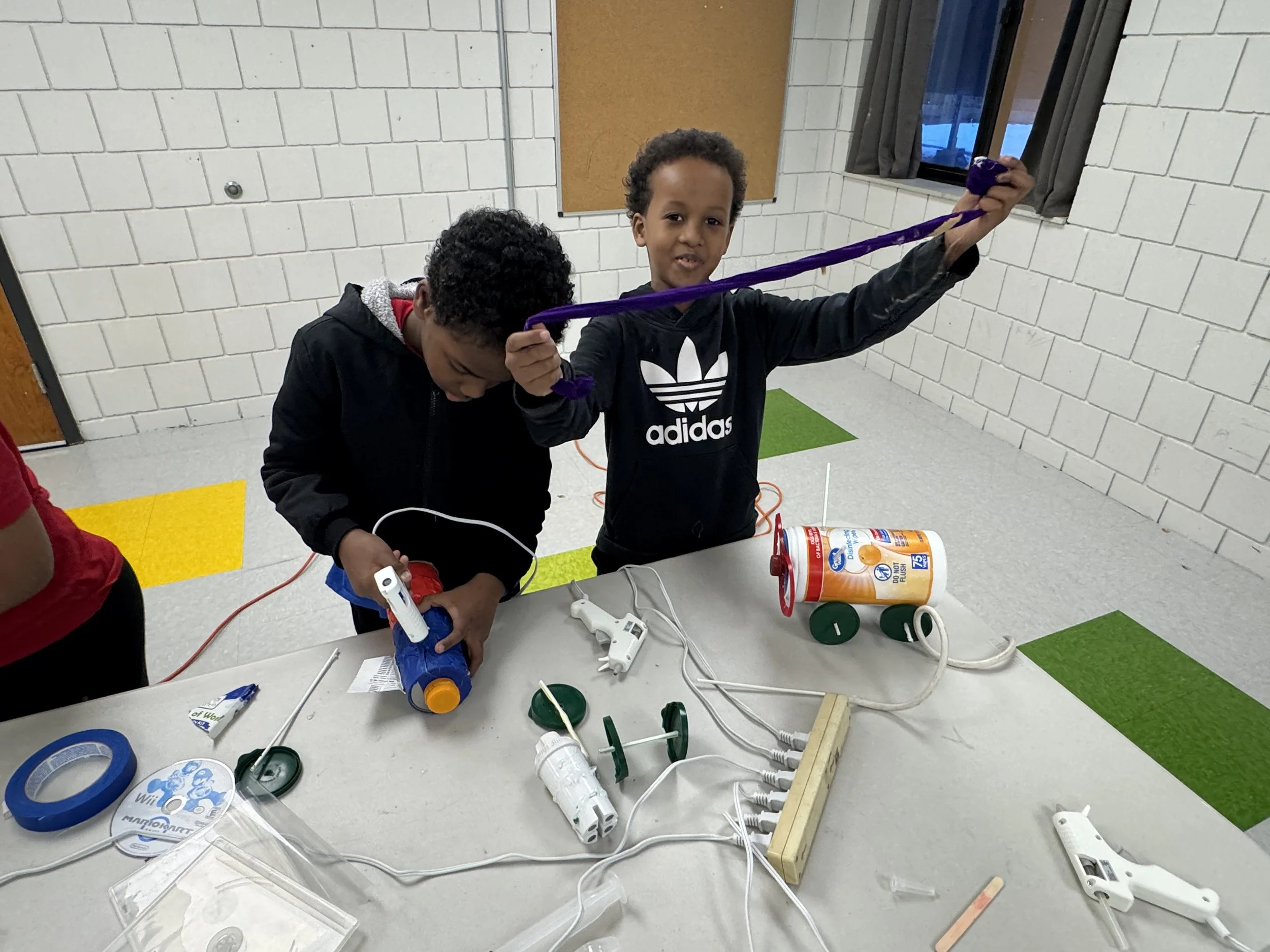
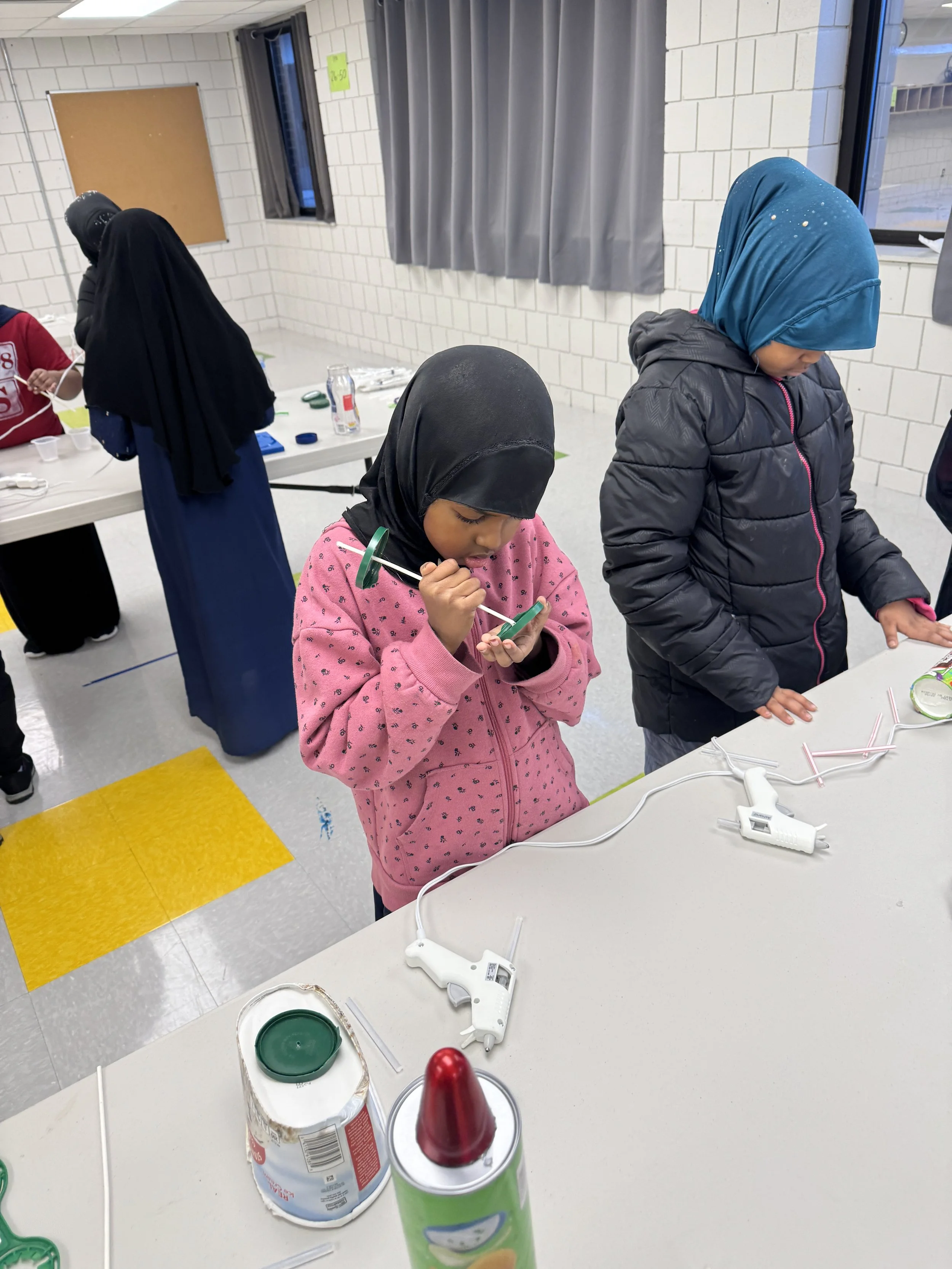
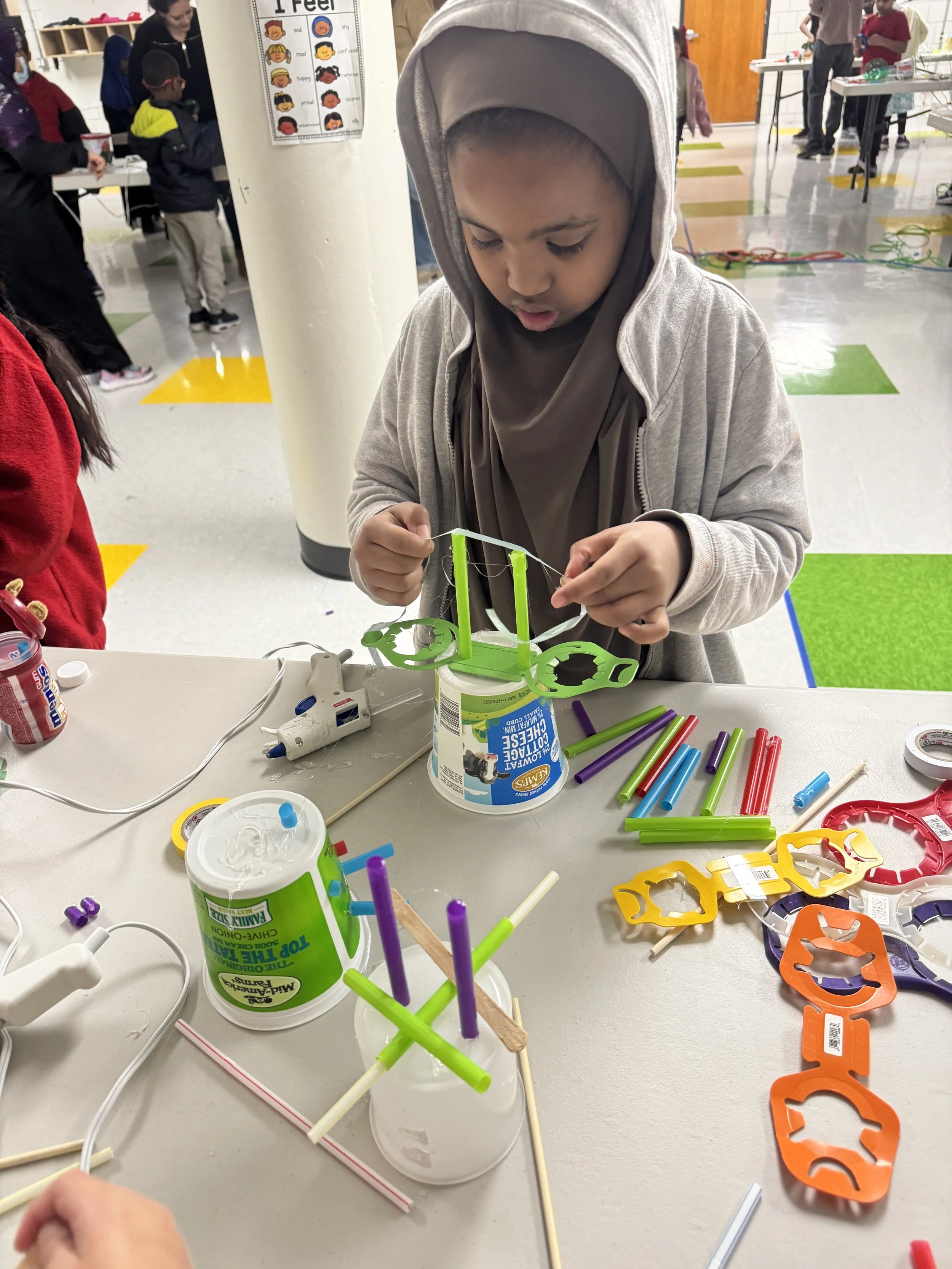
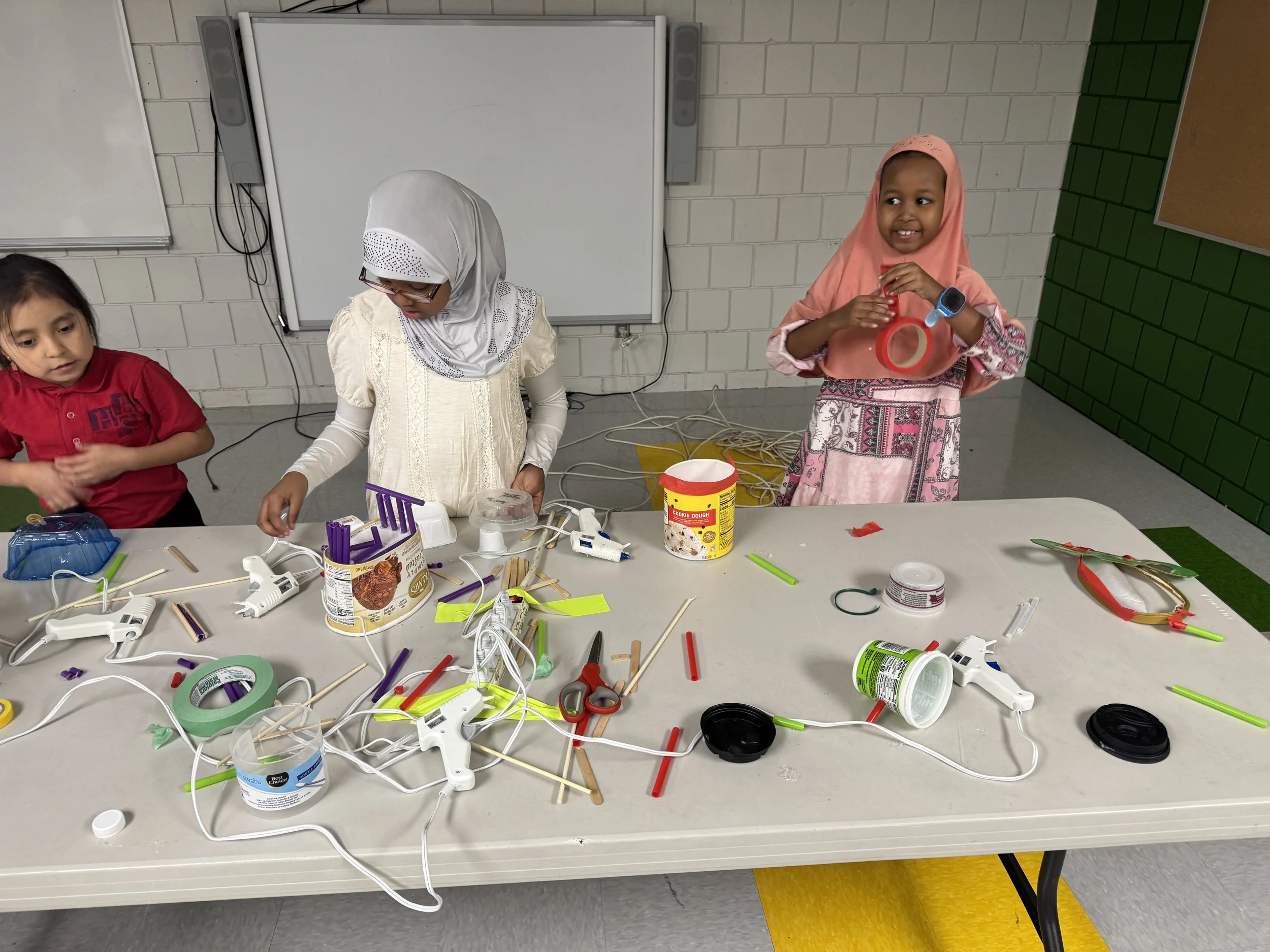
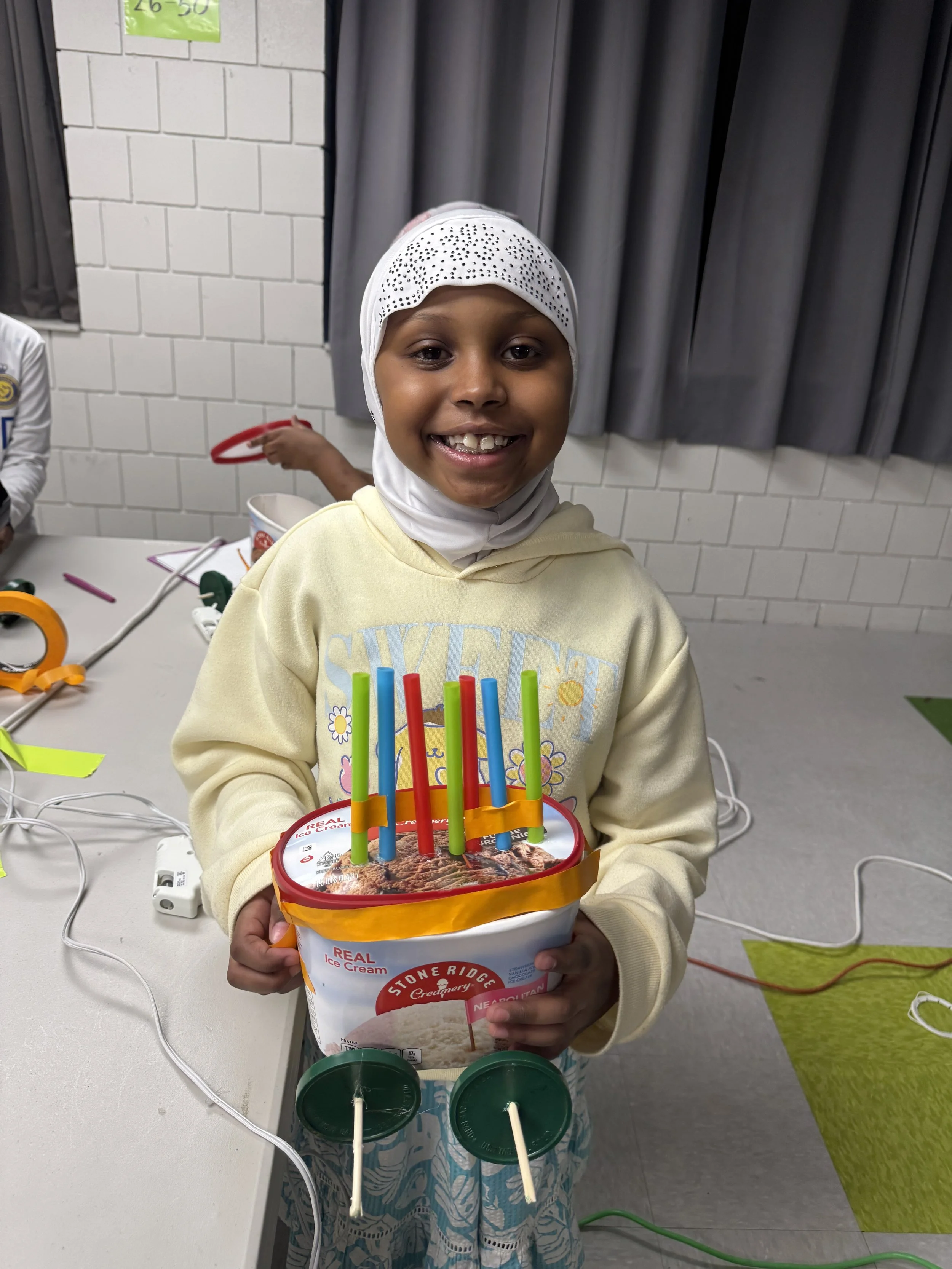
Hennepin is a majority-Somalian charter school, and we were interested in shifting the focus on toy-making to include an emphasis on non-animate creations such as vehicles and buildings. In an effort to also include a STEM element, I introduced simple methods for creating axel-and-wheel combinations that were actually functional i.e. the wheels turn!
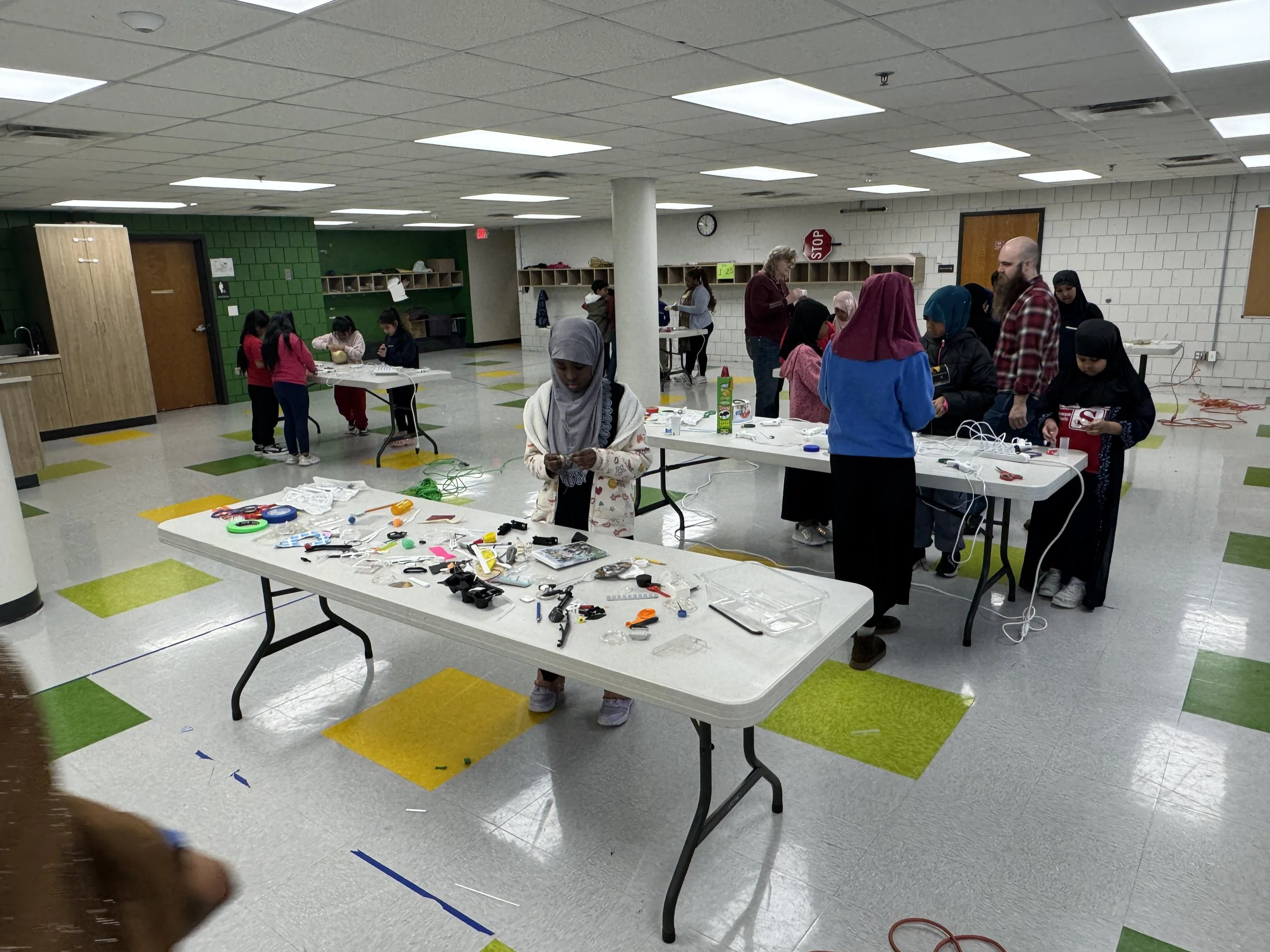
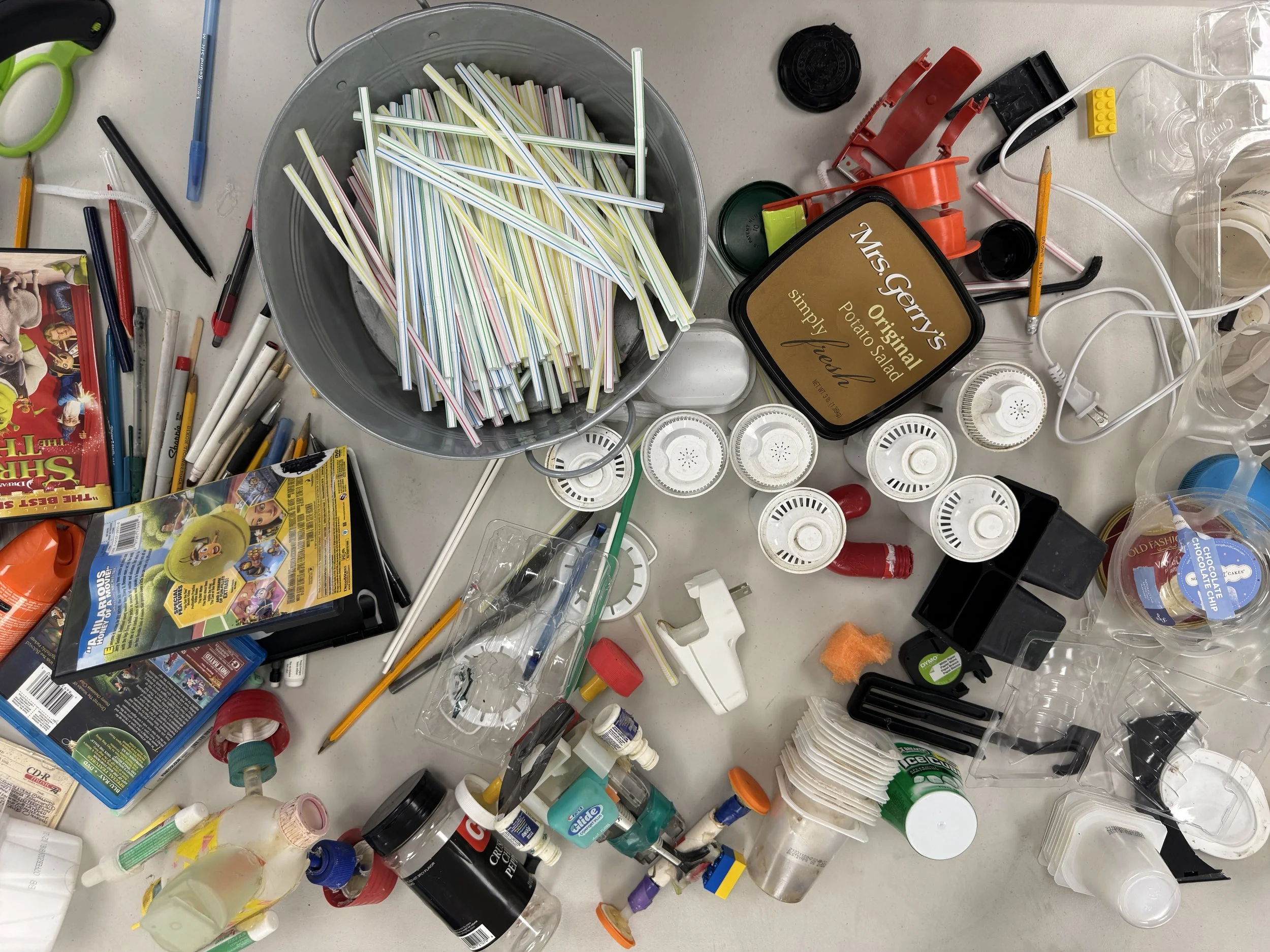
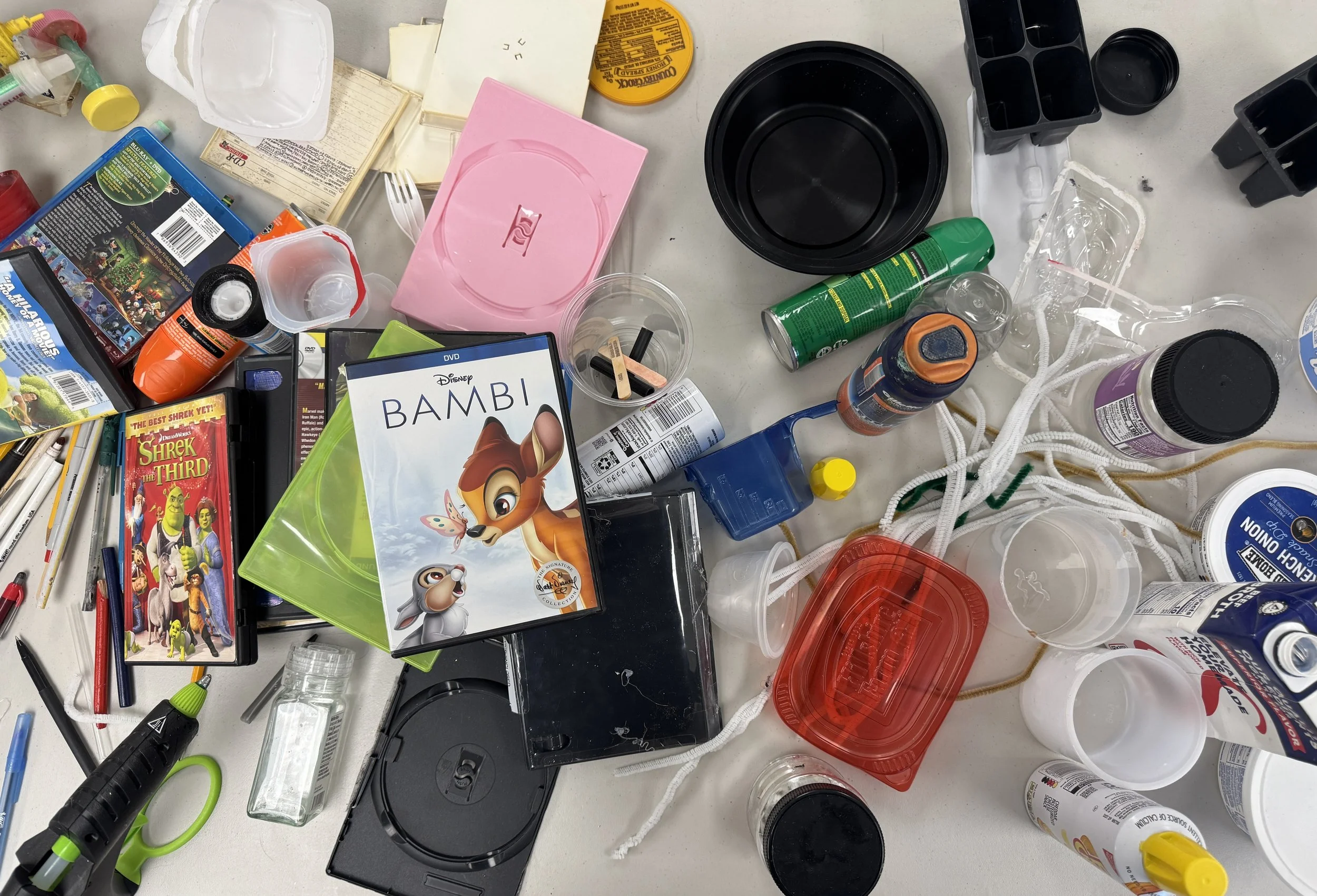
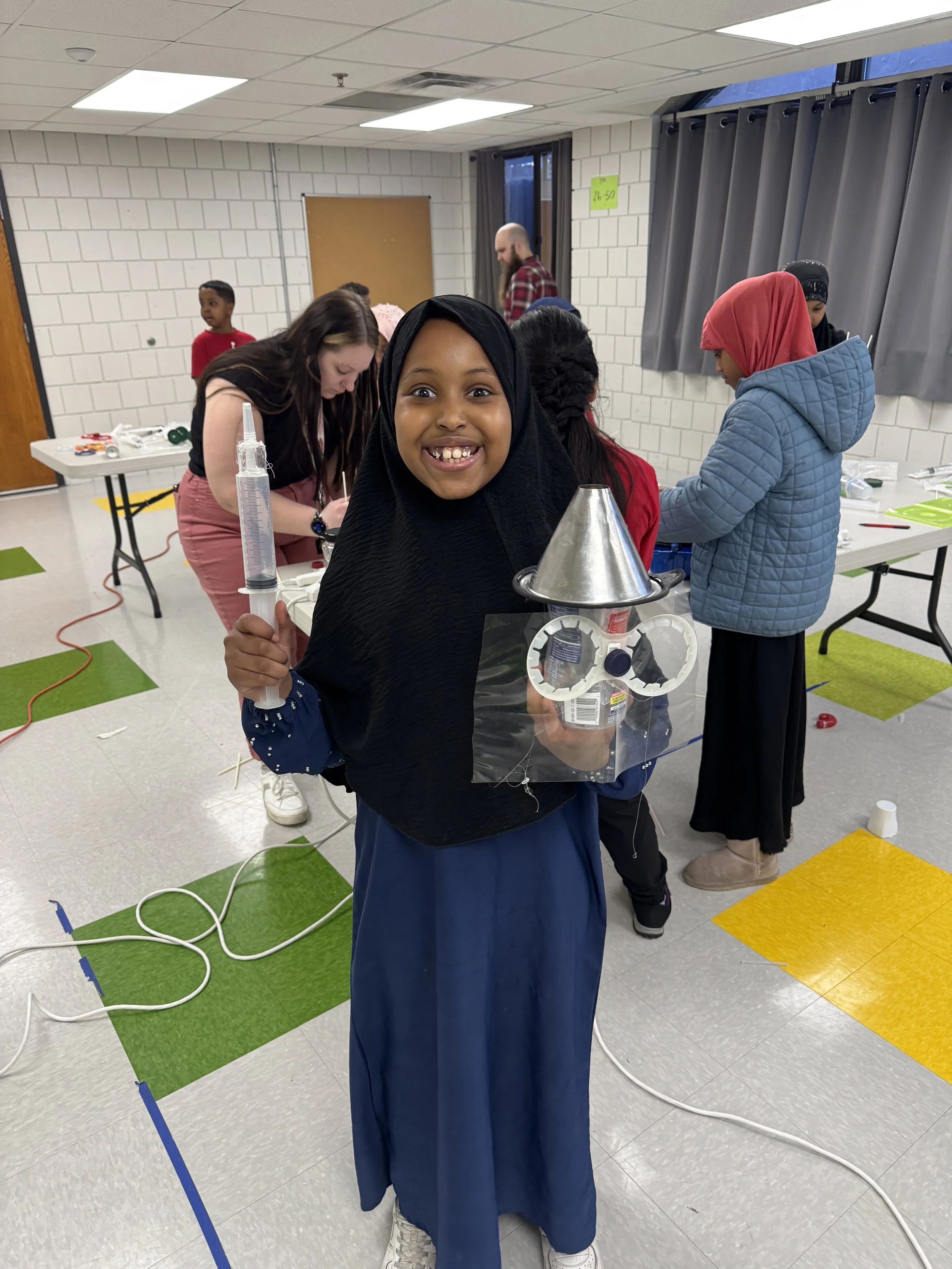
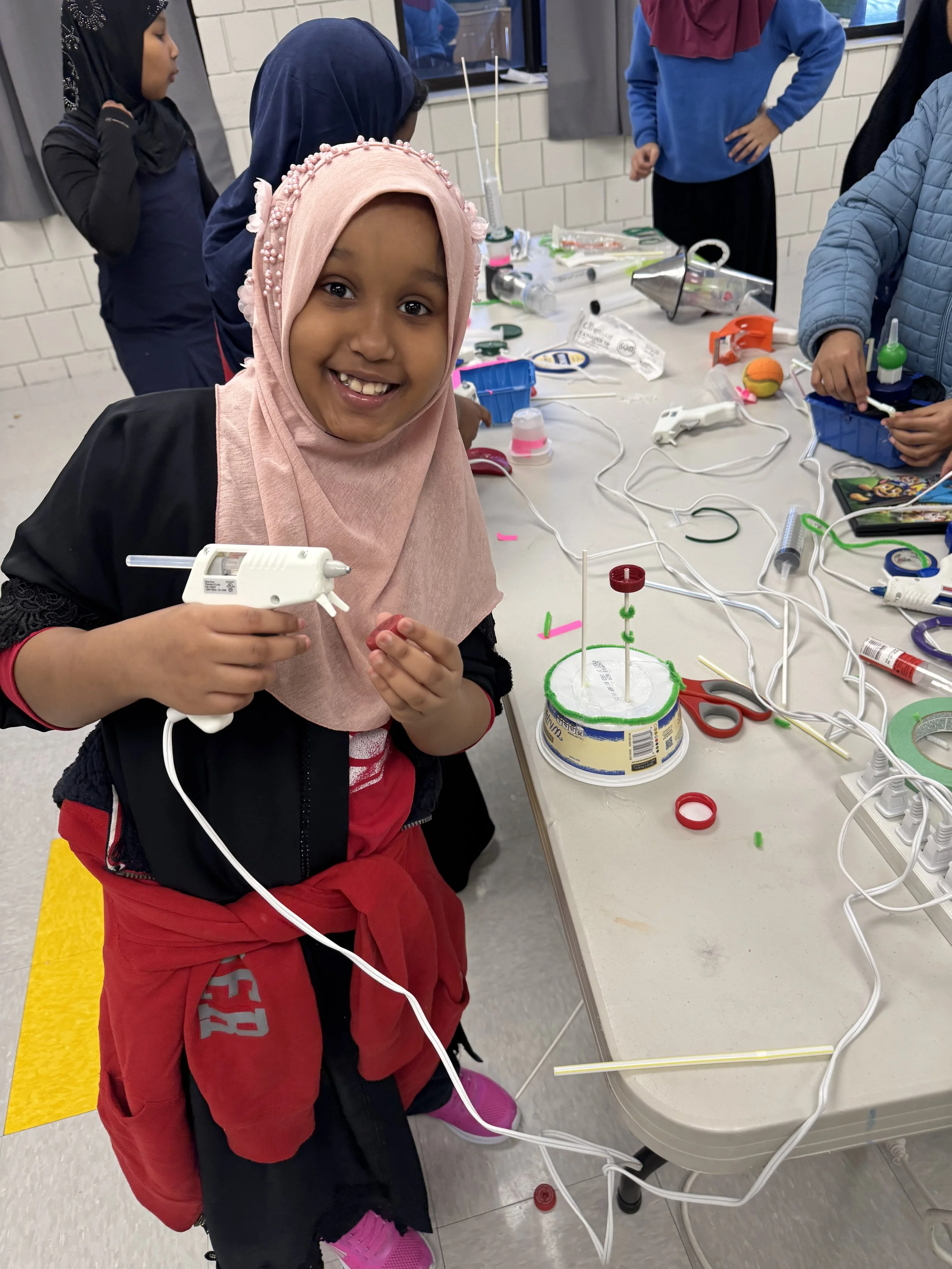
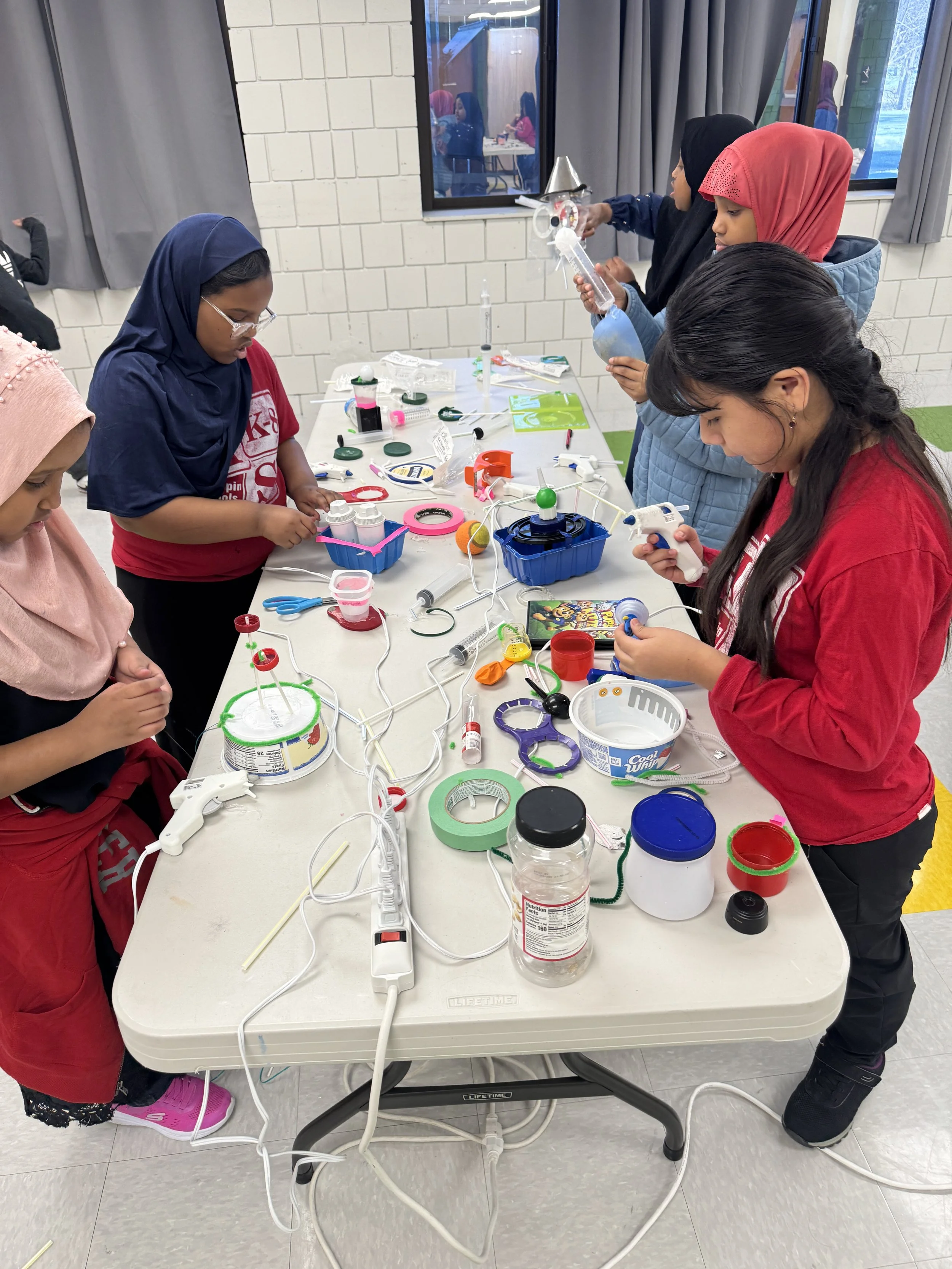
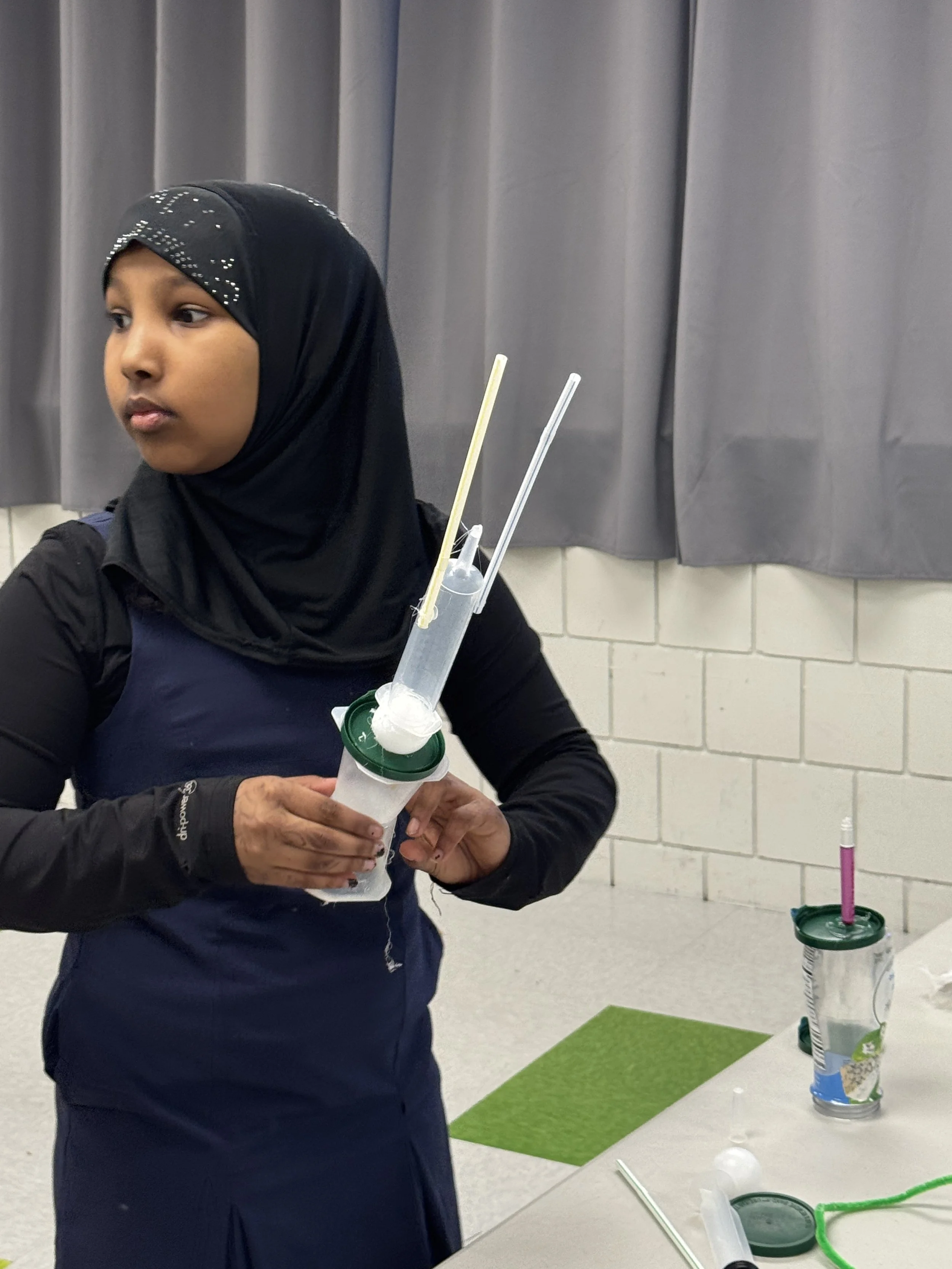
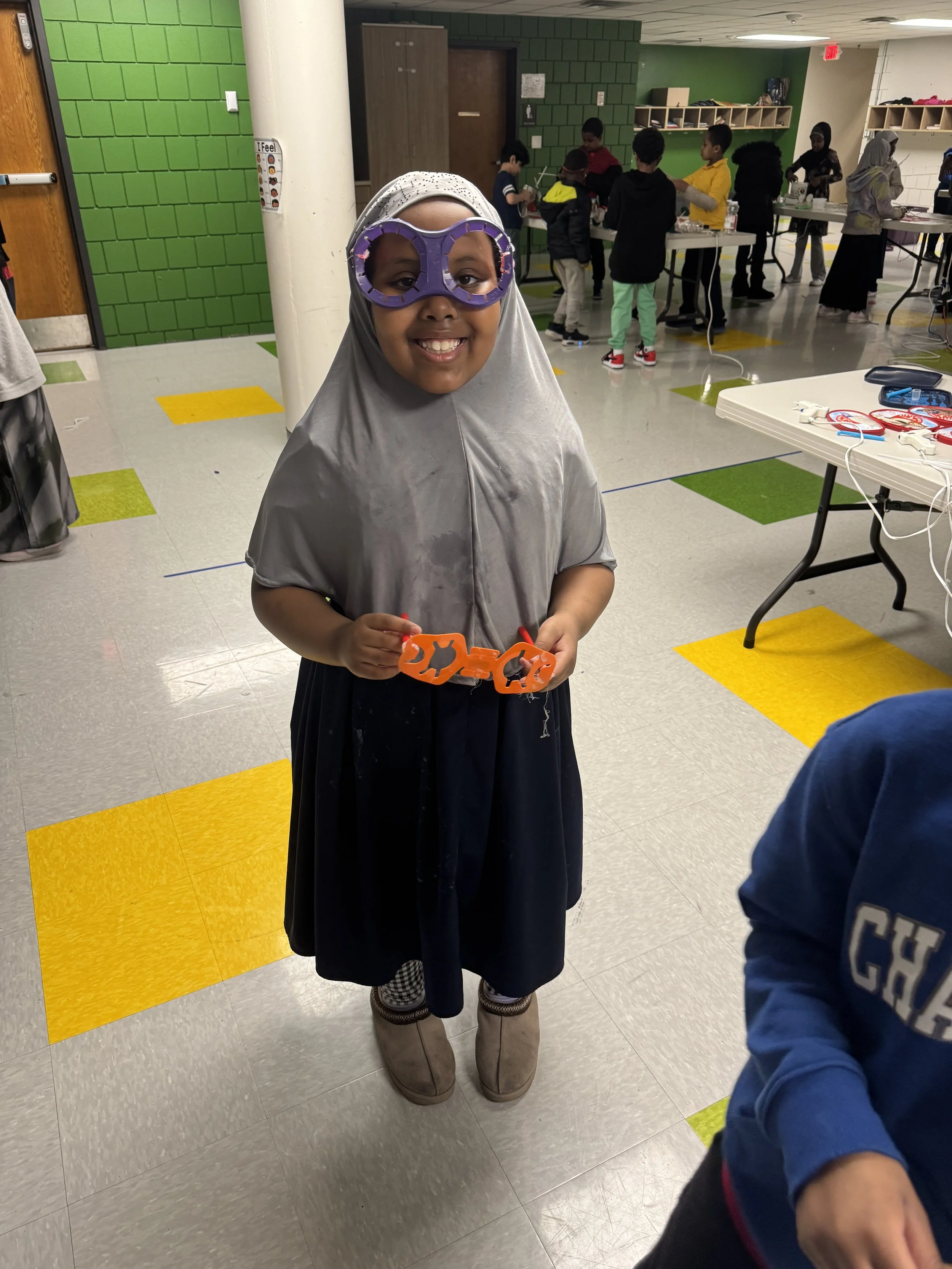
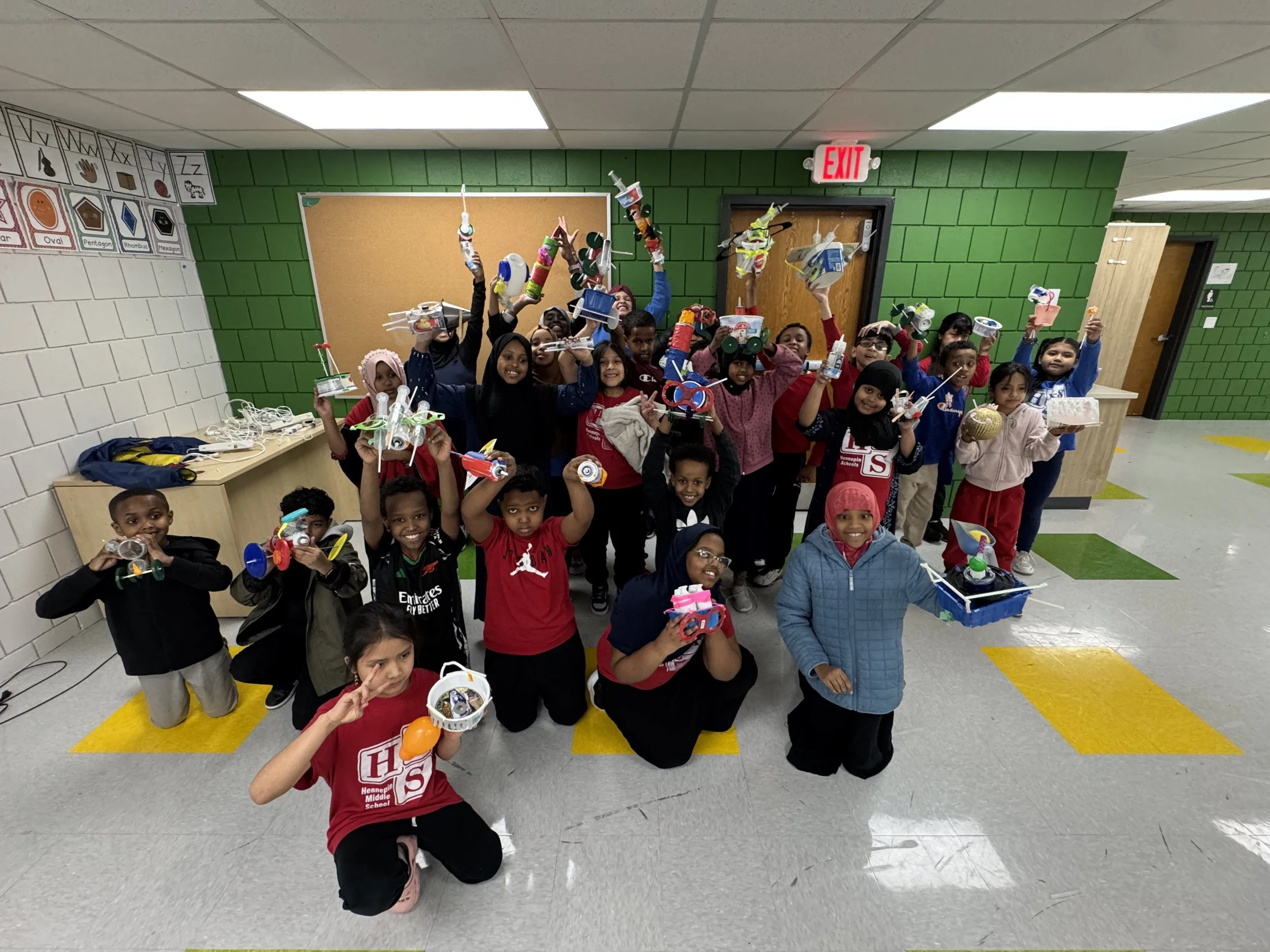
Although the tutorial employing drink straws, coffee stir sticks and plastic caps to create turning wheels proved a popular method, students pursued many other designs: rocket ships, boats and dwellings, as well as lasers, radio towers and glasses were among the many unique designs!
The last phase of toy-making with the 2nd grade students. Animate imagery is by no means a monolithic prohibition for this age group, particularly since the population also consists of Latinx and non-muslim students, and this day found students creating animals and dolls as well as wheeled vehicles, spaceships and structures.
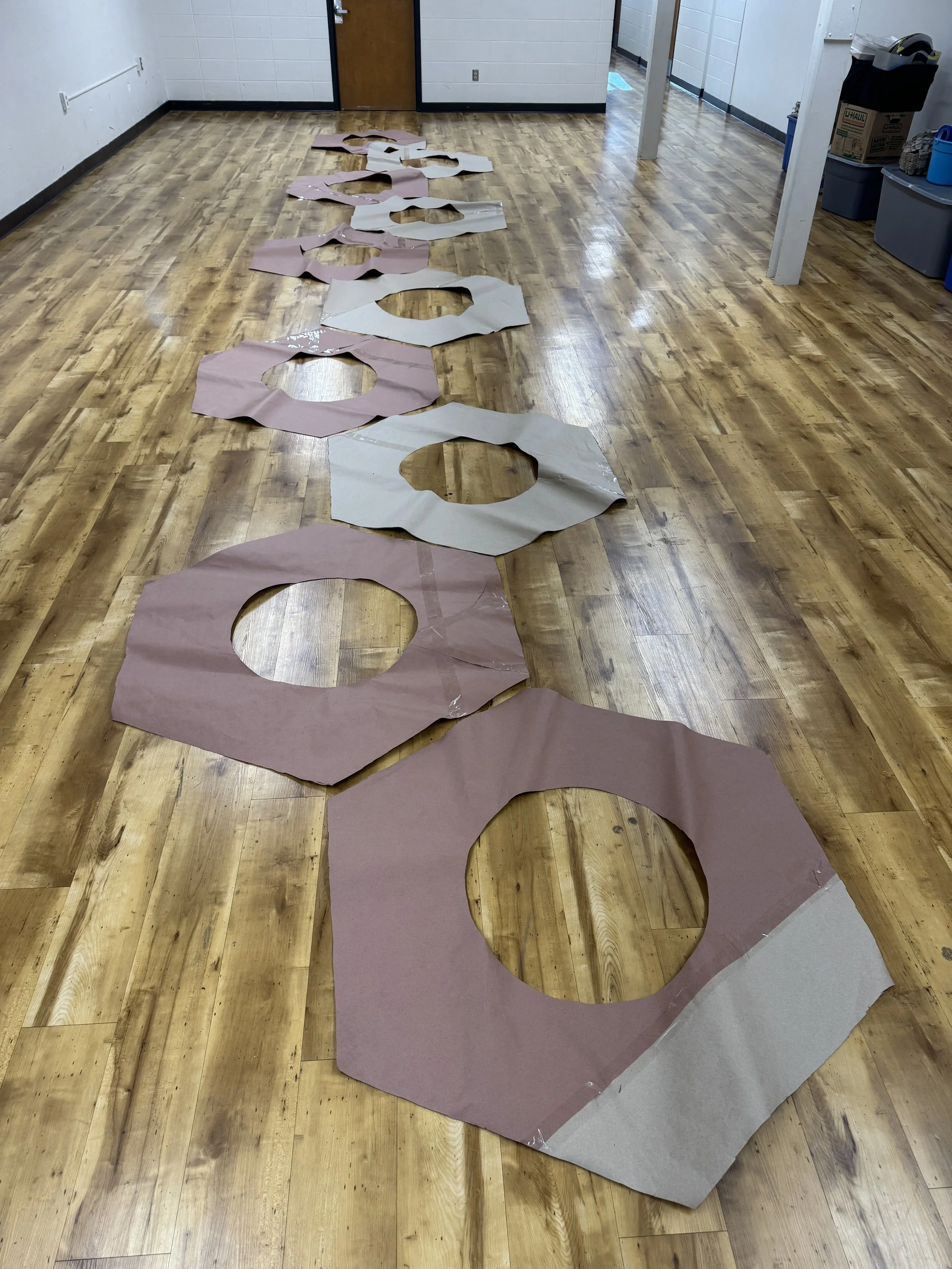
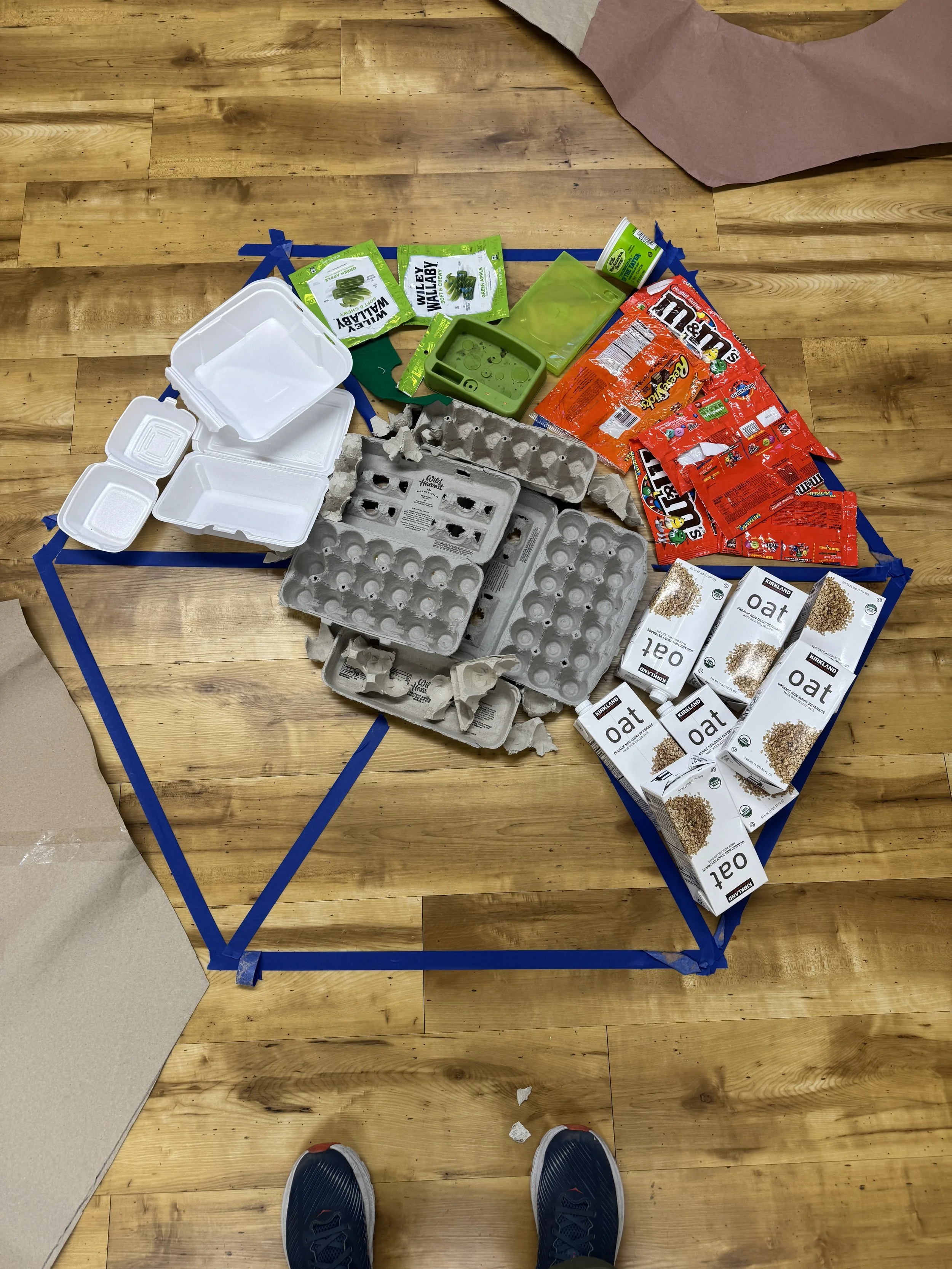
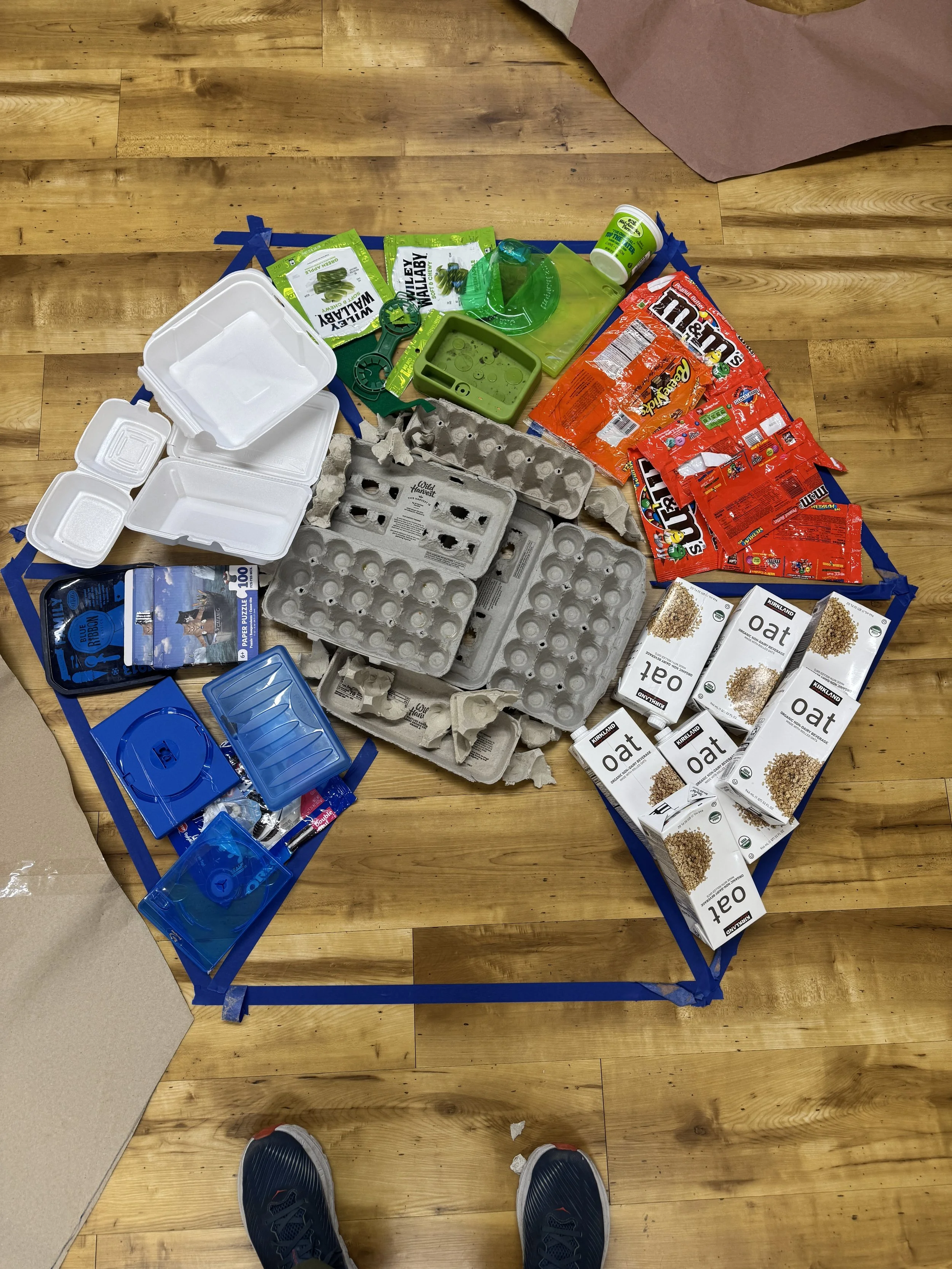
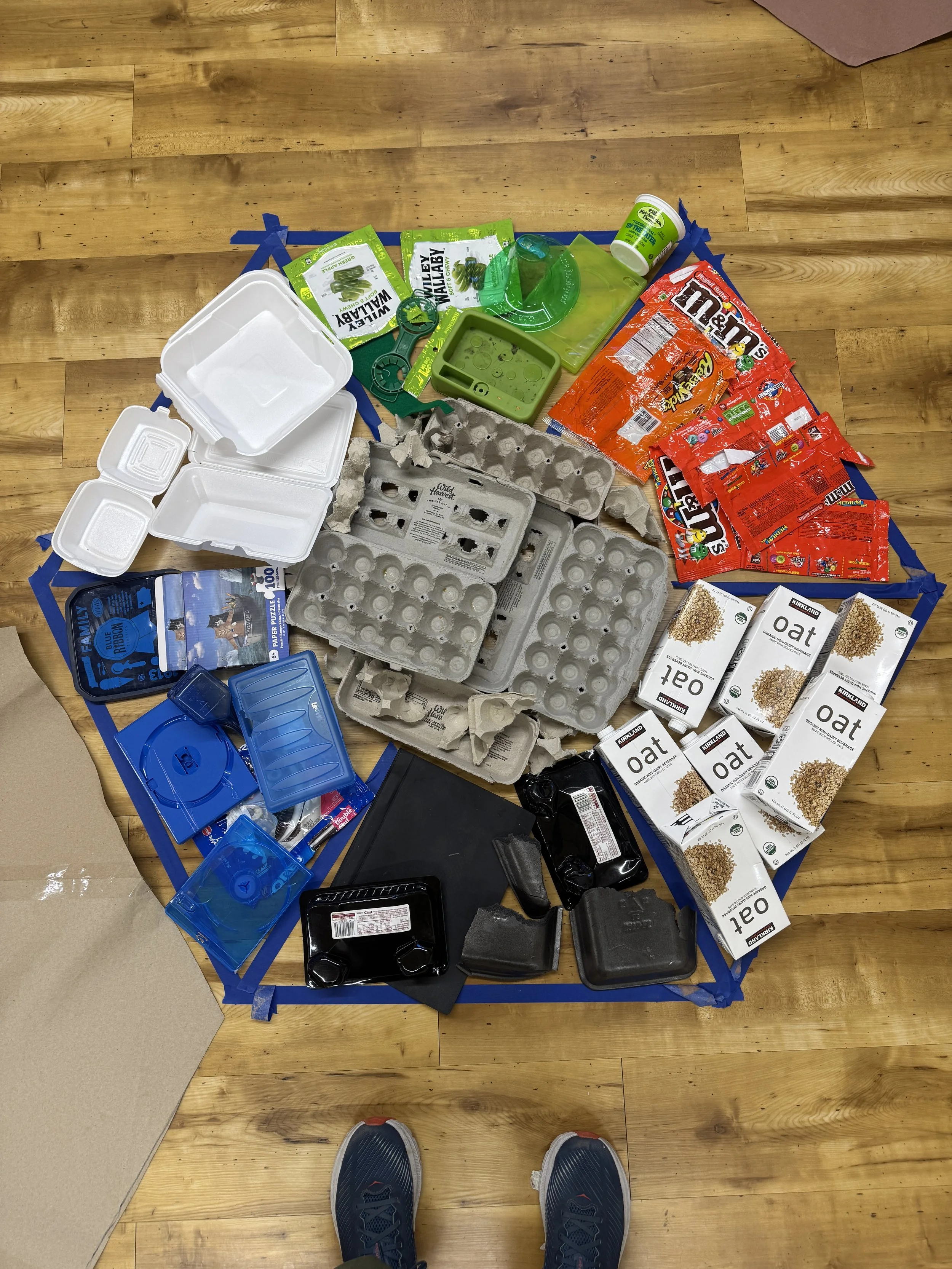
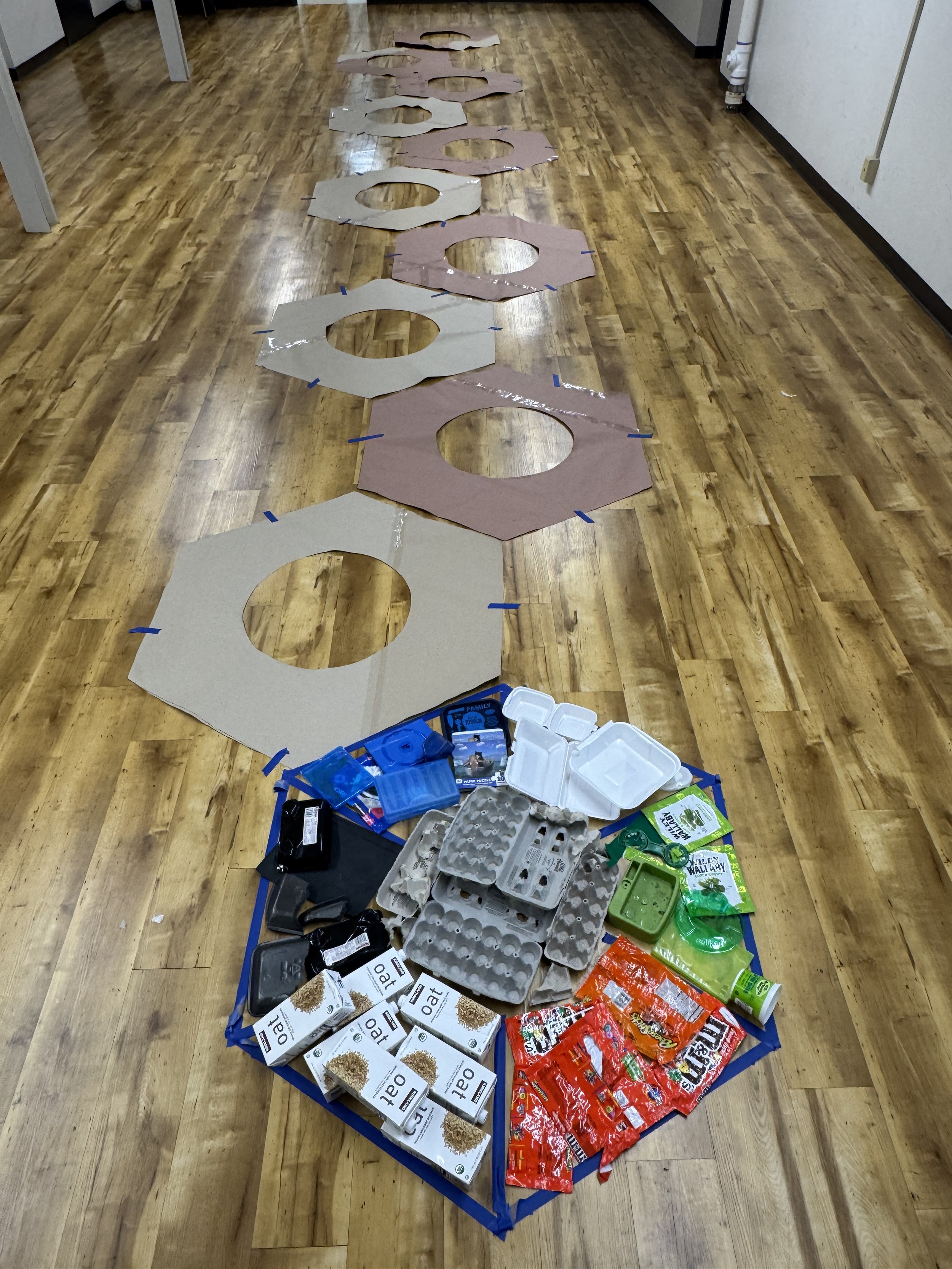
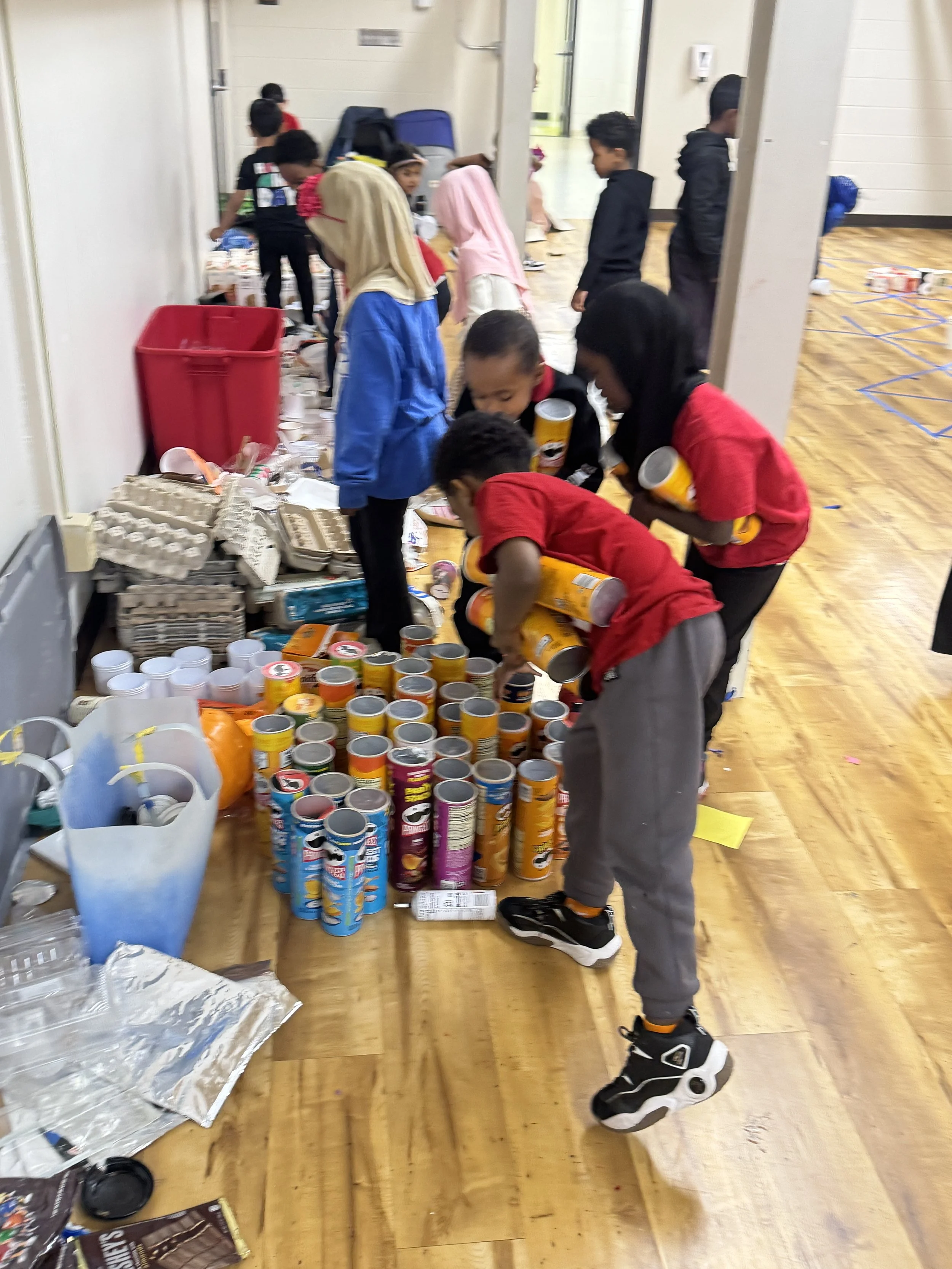
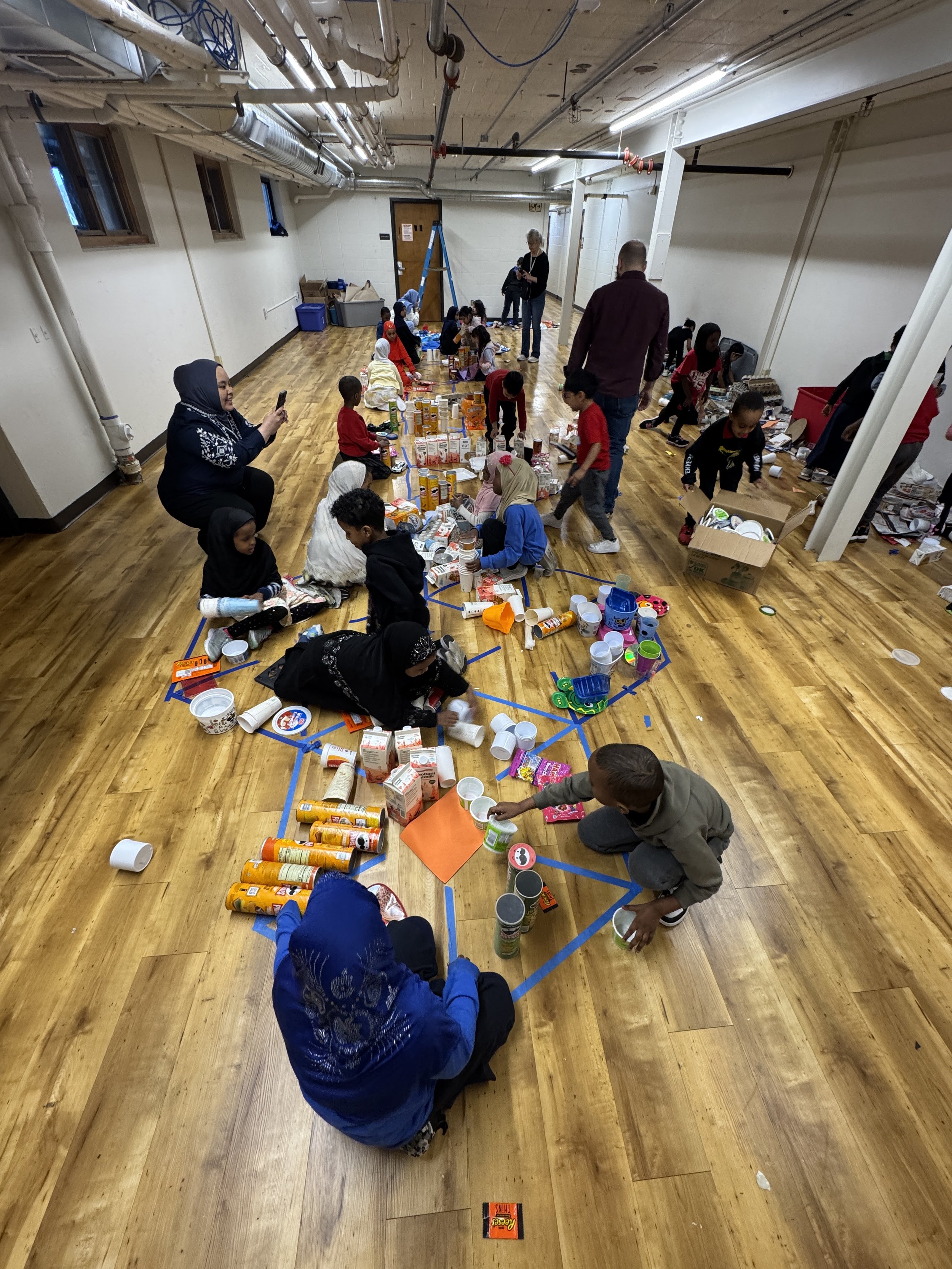
Our final collaboration at Hennepin would be a floor-based, temporary site-specific installation. This would mark the first time I have worked with Kindergarten and First-graders on a project of this type (past iterations were made by 2nd and 3rd graders at Northside Elementary in St. James). For the third time, I had hoped to pursue this activity outdoors, but again those hopes were thwarted by a variety of factors (weather and security being the main concerns). I will continue to try to find that ideal combination of factors that will make it possible to pursue this project outdoors.
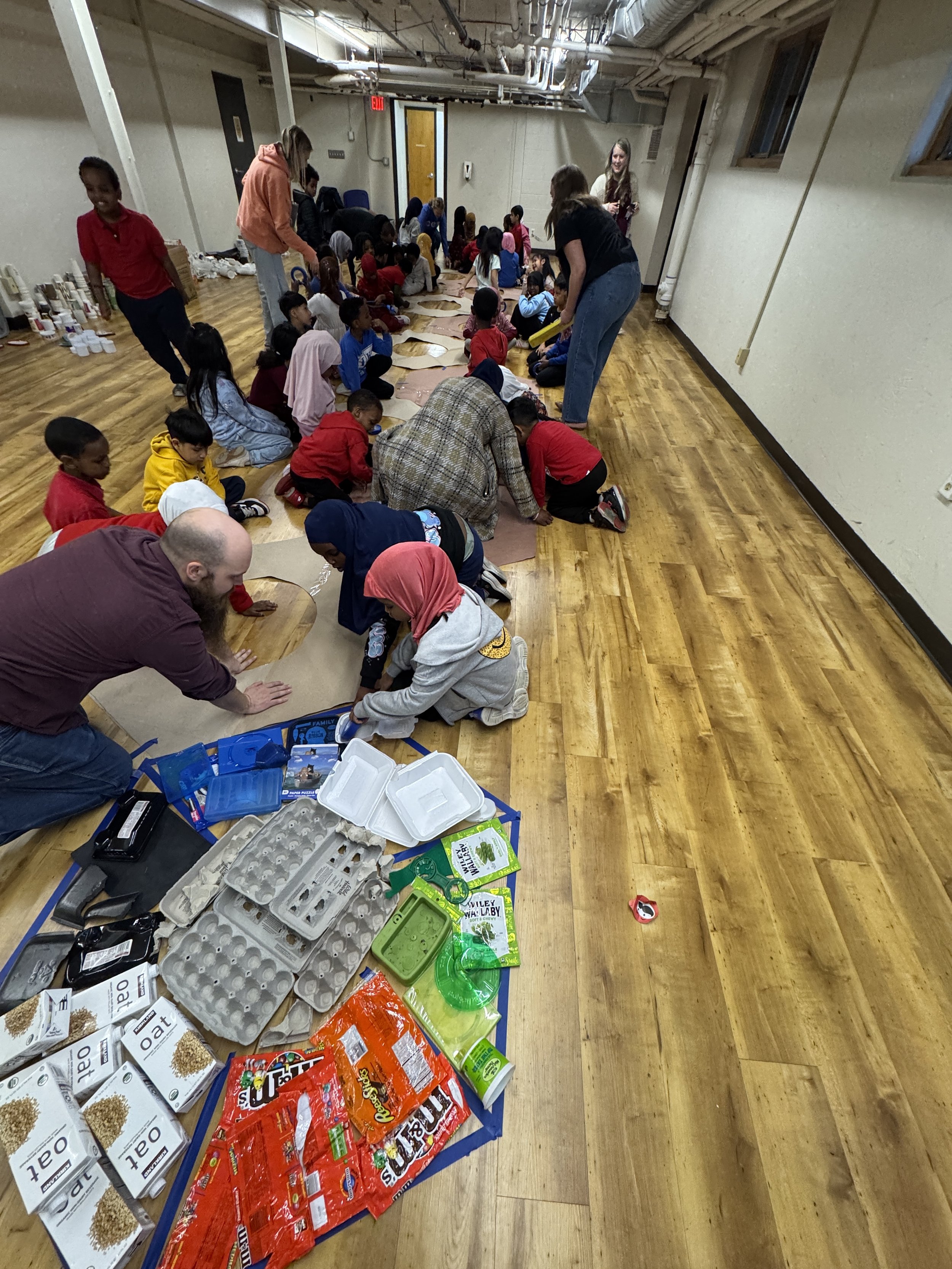
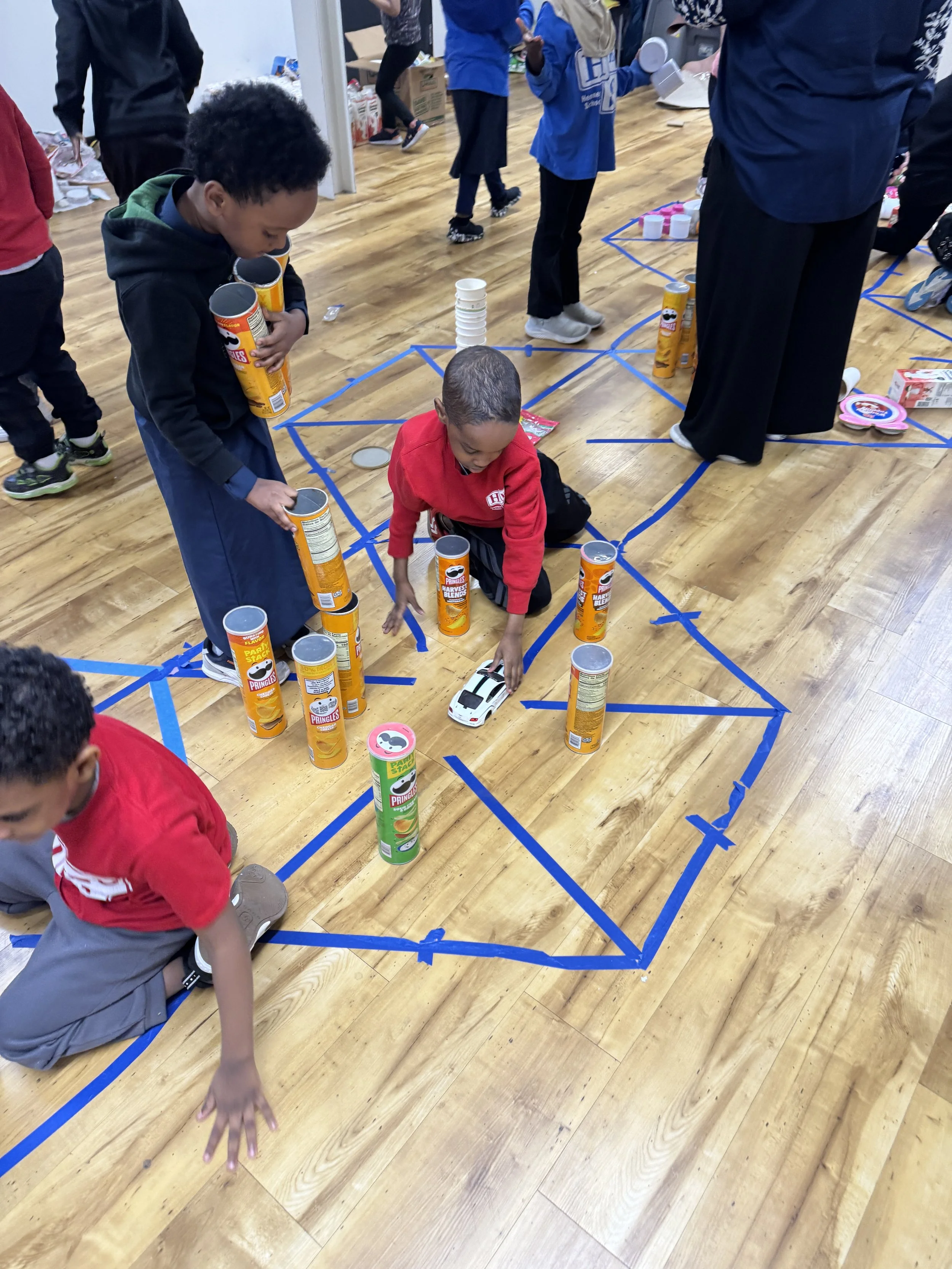
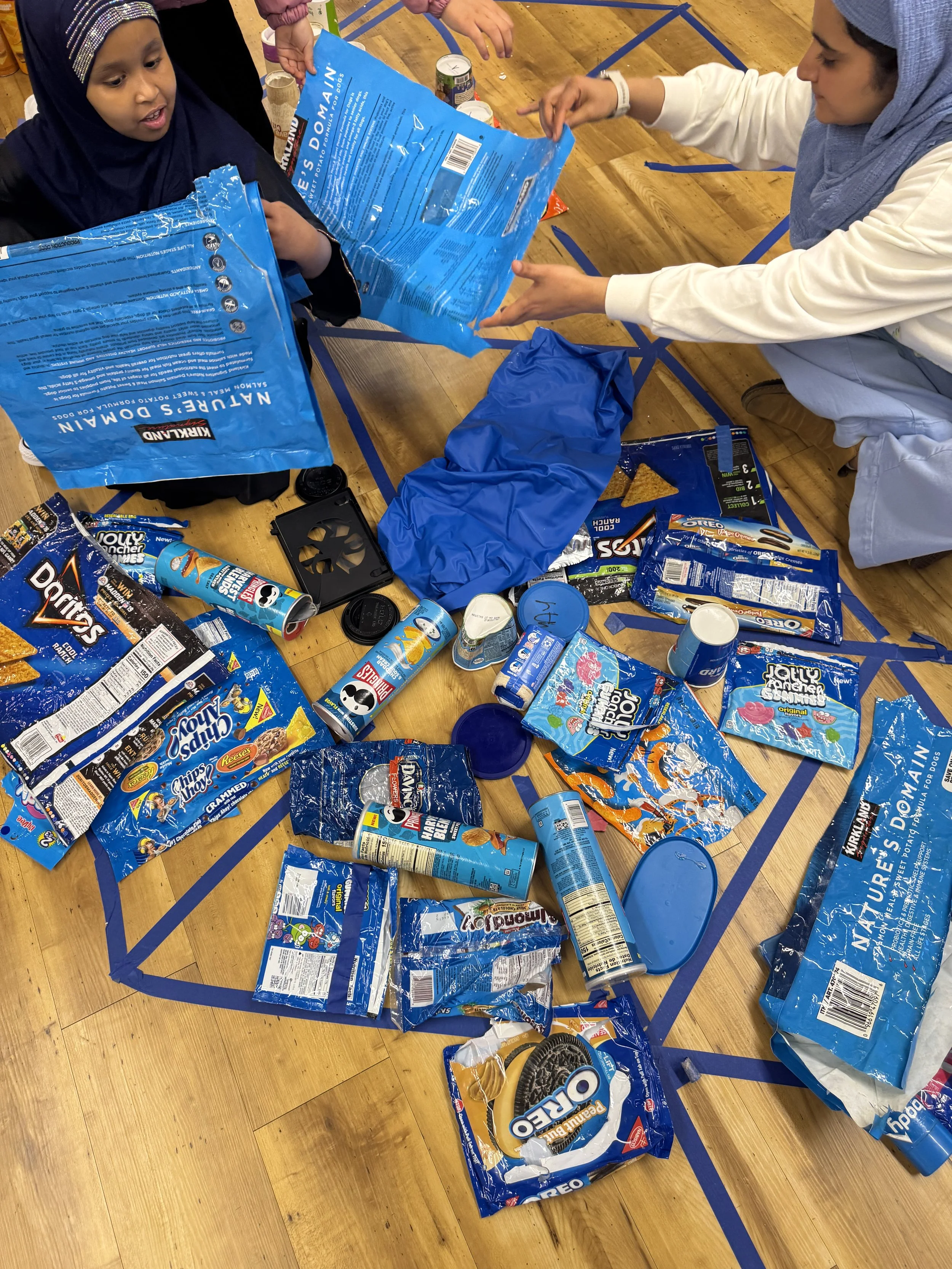
I began by lining up a variety of reuse materials along the walls of the space, then laying out a series of 9 paper hexagon templates (extending the ‘honeycomb’ visual theme we used for the United Tessellations project) with central circular openings. I then created an example composition. When the first-graders arrived, I showed them the example I made and we talked about the use of repetition and variation to create patterns. We discussed color, shape, texture, and type of object as ways to create repetition, and light and dark, warm and cool as ways to create contrast in a pattern.
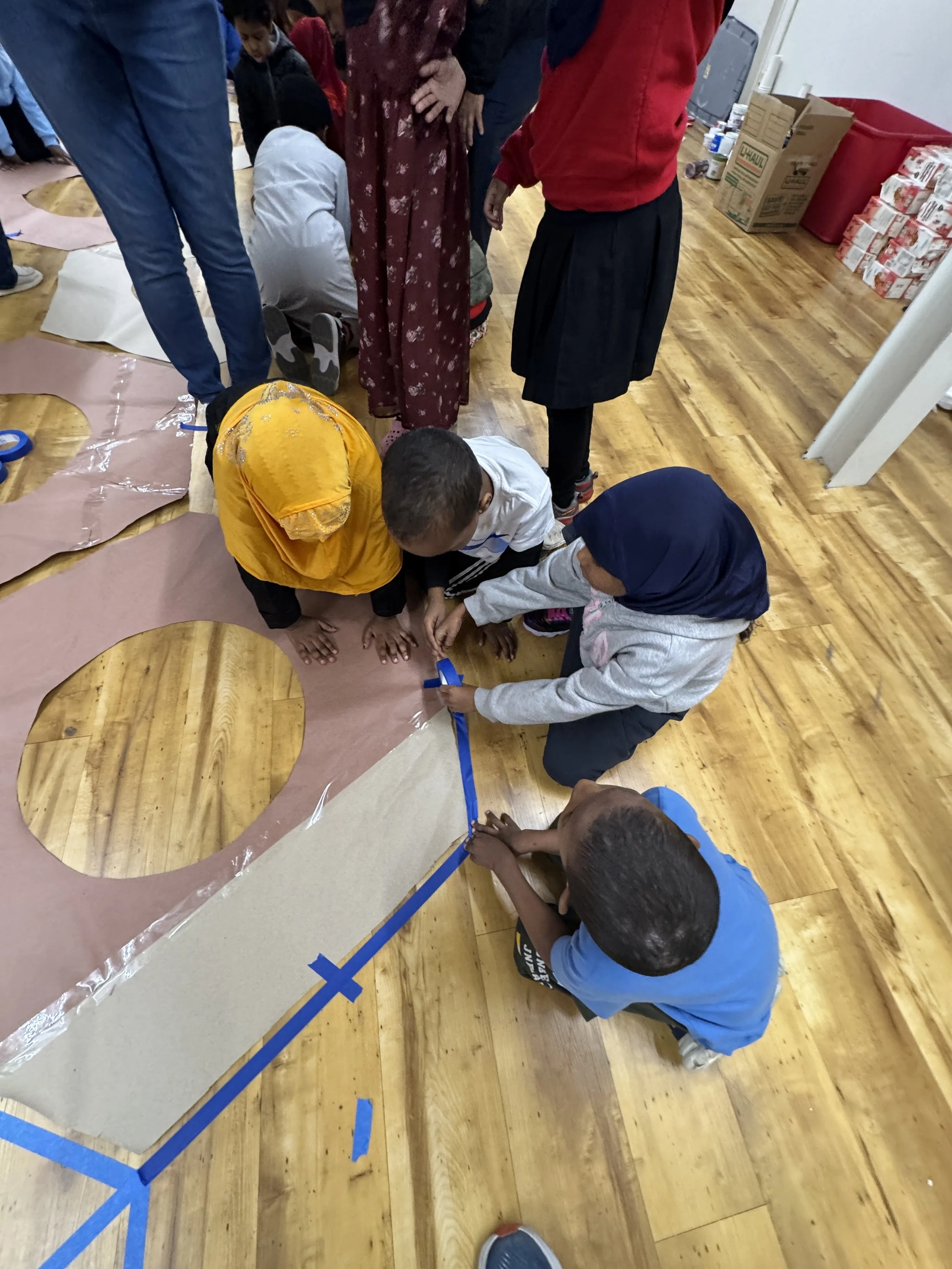
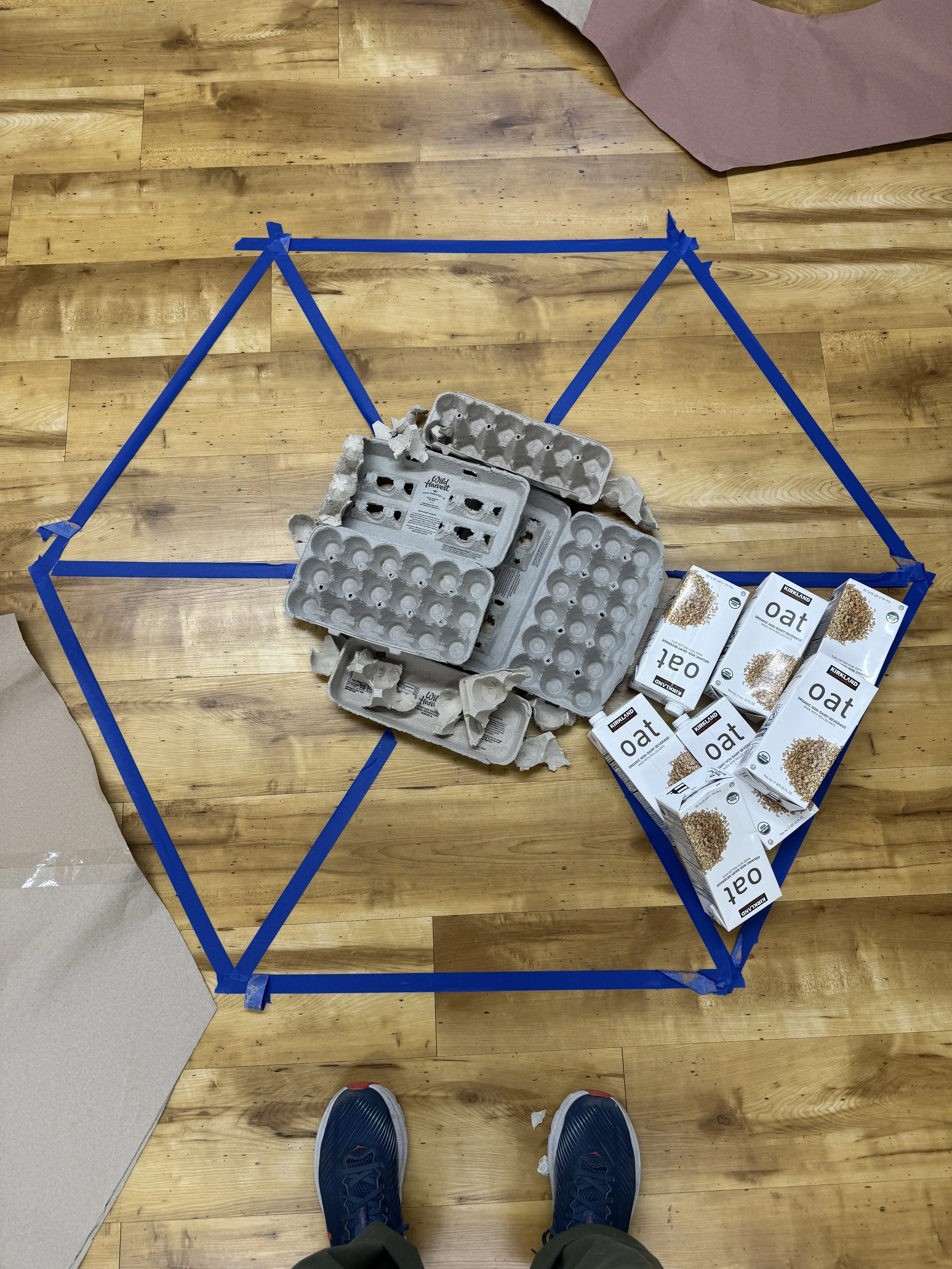
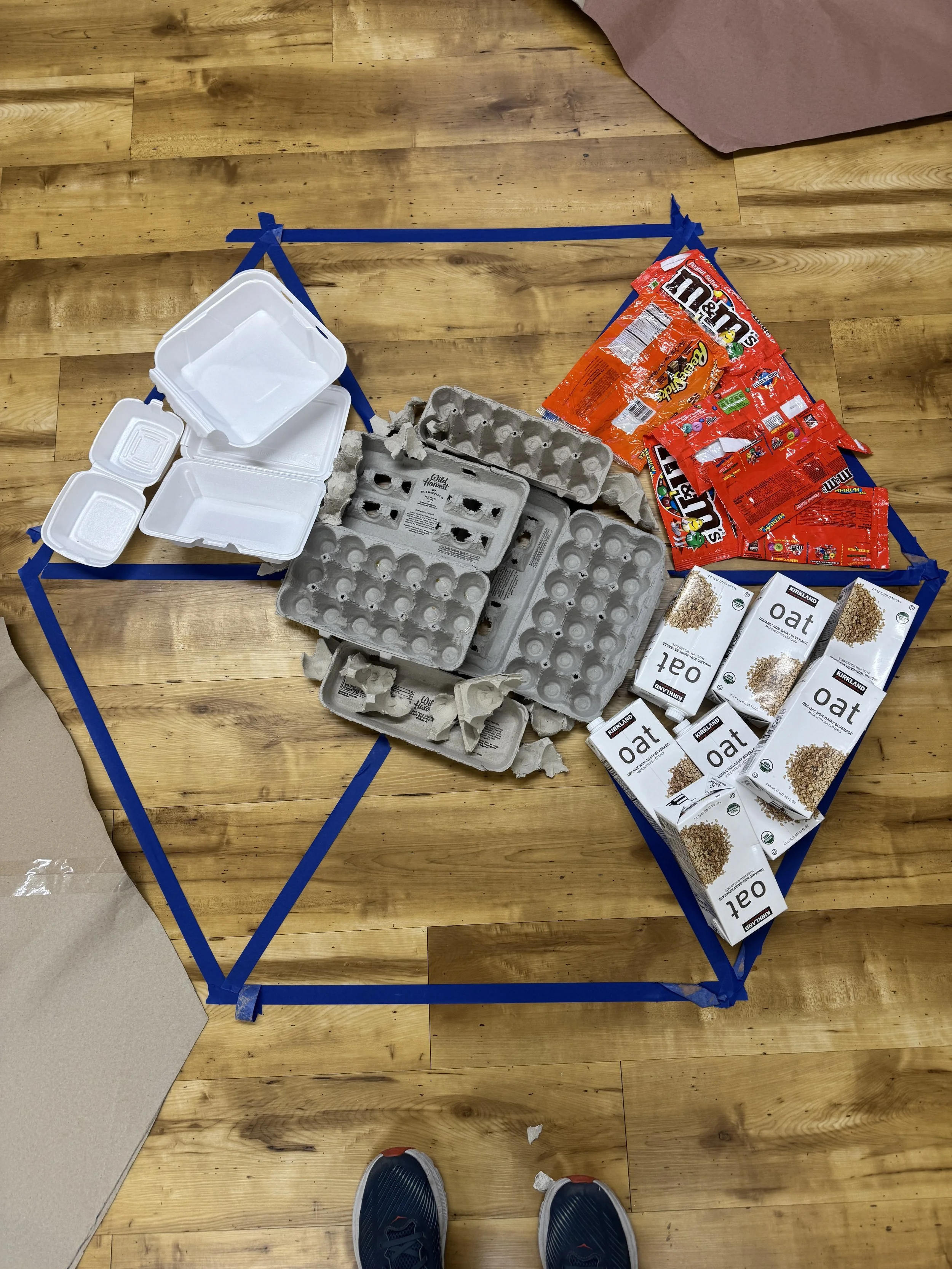
The art teacher Joe Tarter and I then showed the students how to begin by first filling the central circular space with a uniform material (same color, shape, or type of object), then lay out tape around the outside of the template, creating the hexagon outline. Finally, we carefully pulled away the paper template to reveal the shape, completing the preparations by dividing each hexagon into five ‘slices’ with tape. The first graders surprised me with how well they followed these (pretty complex) directions!
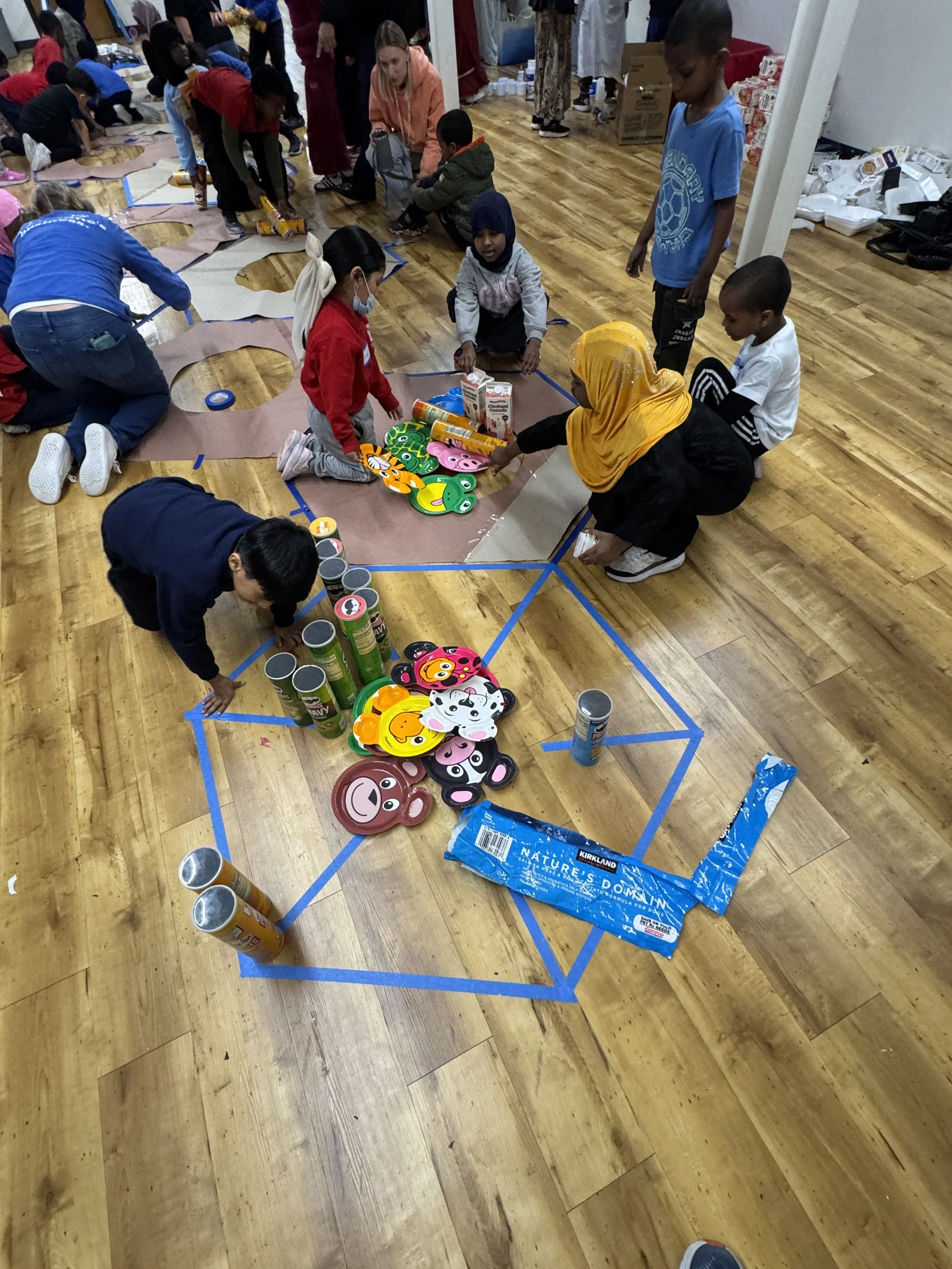
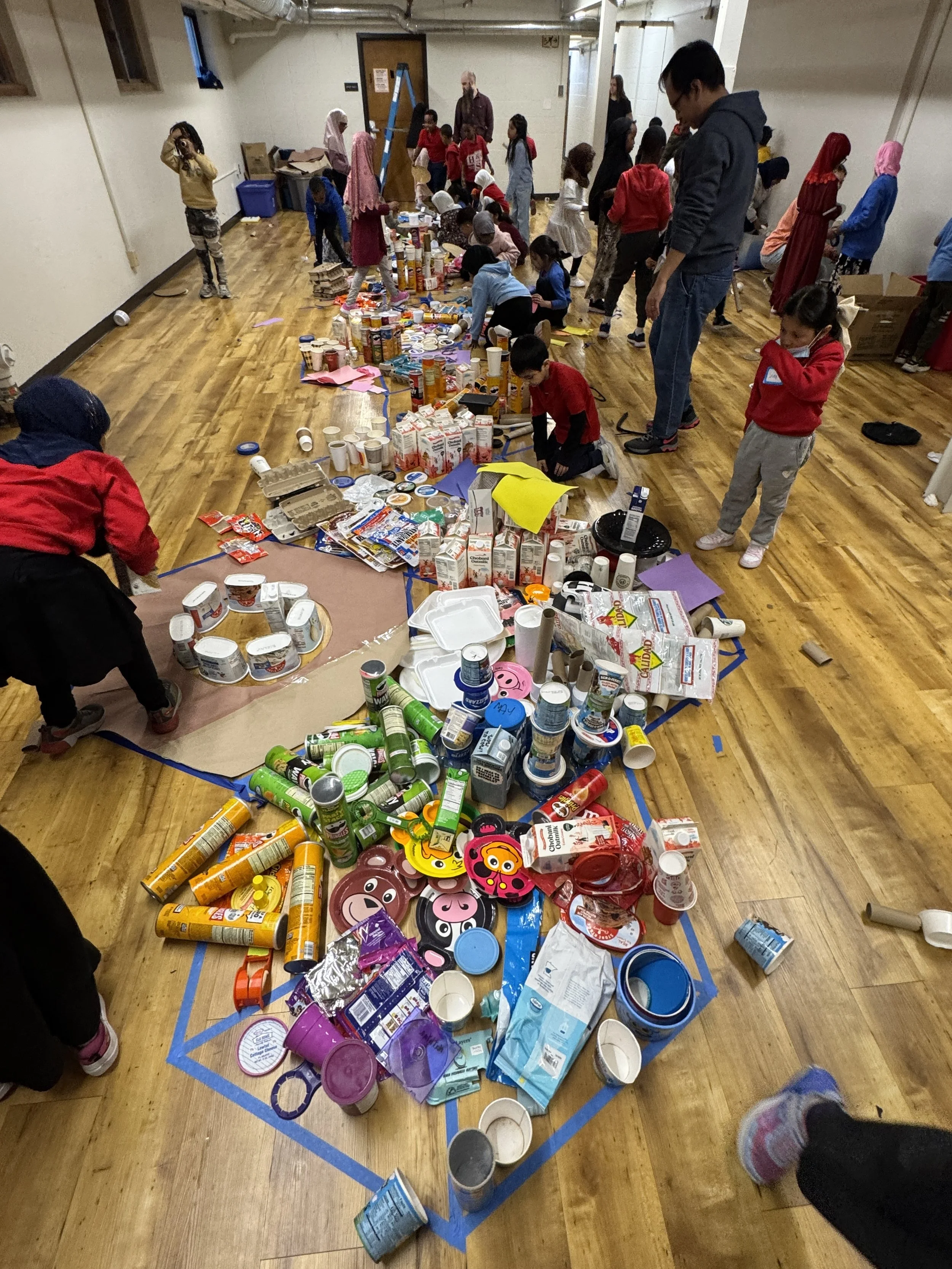
This version had some unique characteristics relative to past versions. The overall format is much more linear—more like a path than a static image. I continue to explore ways that people can work on the cells together without getting in each other’s way, or walking over each-others compositions!
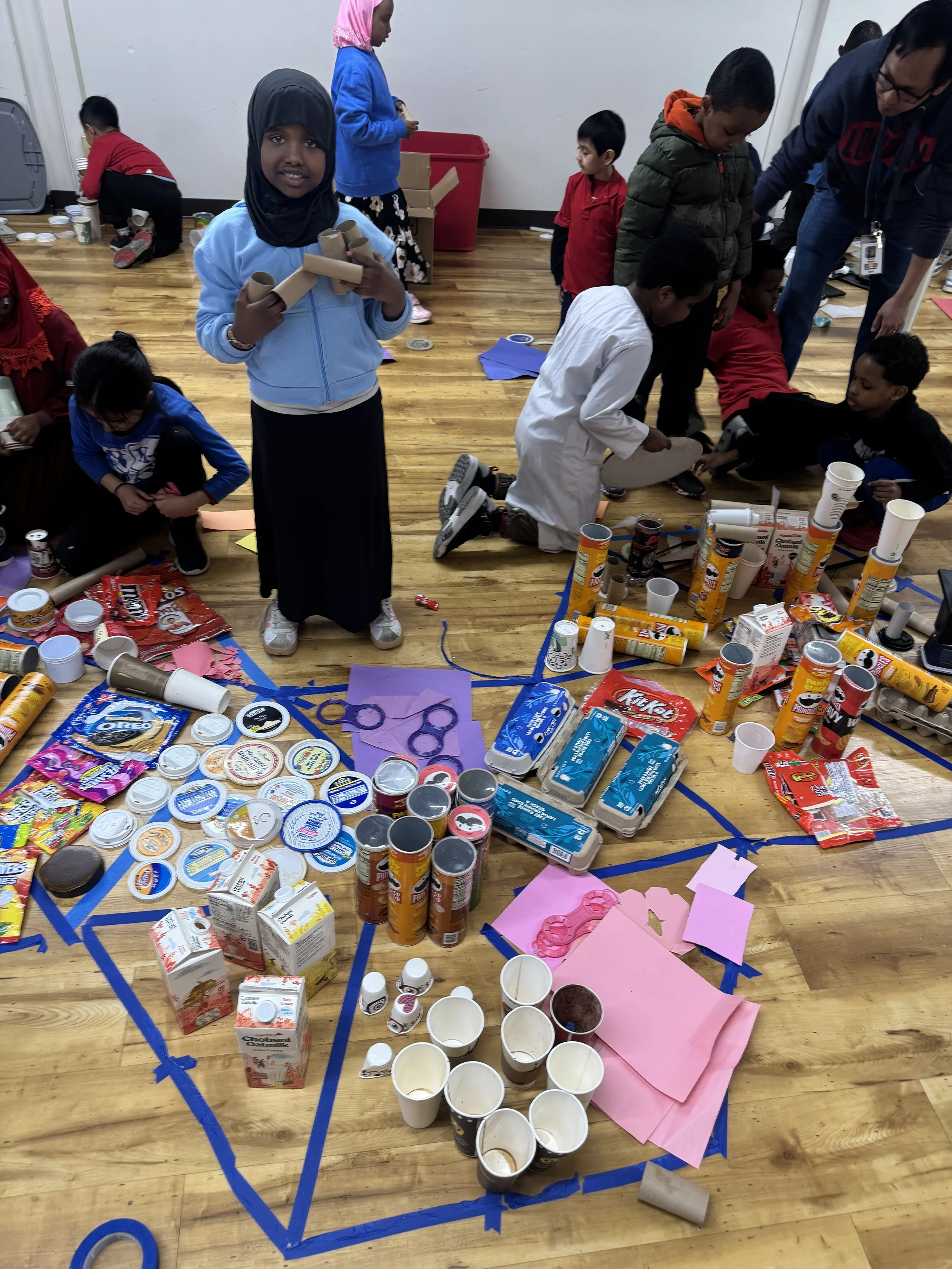
Even the youngest students did a great job organizing their cells by color, shape and type of object. I was also impressed with their understanding of contrasts of colors, values and textures.
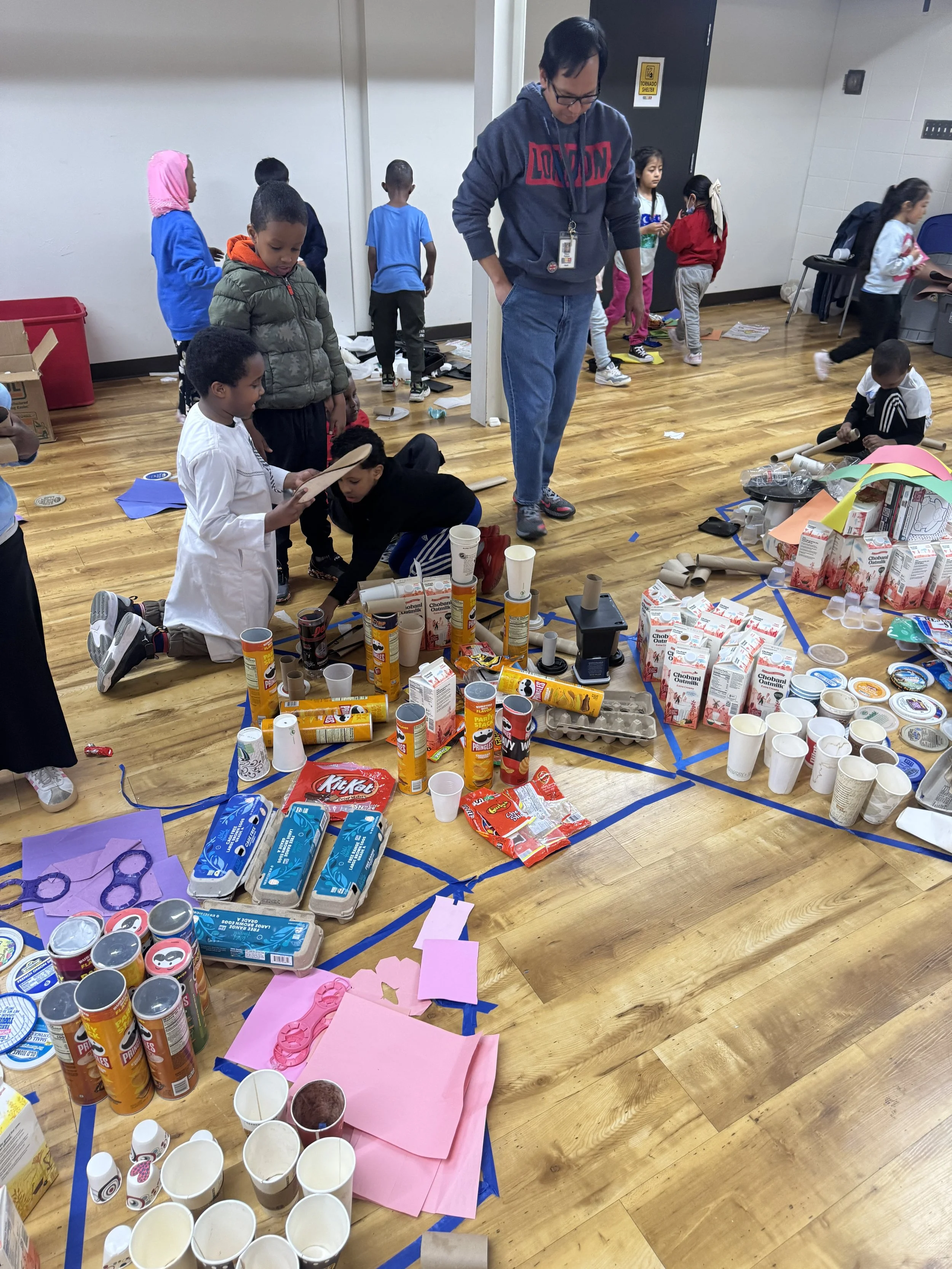
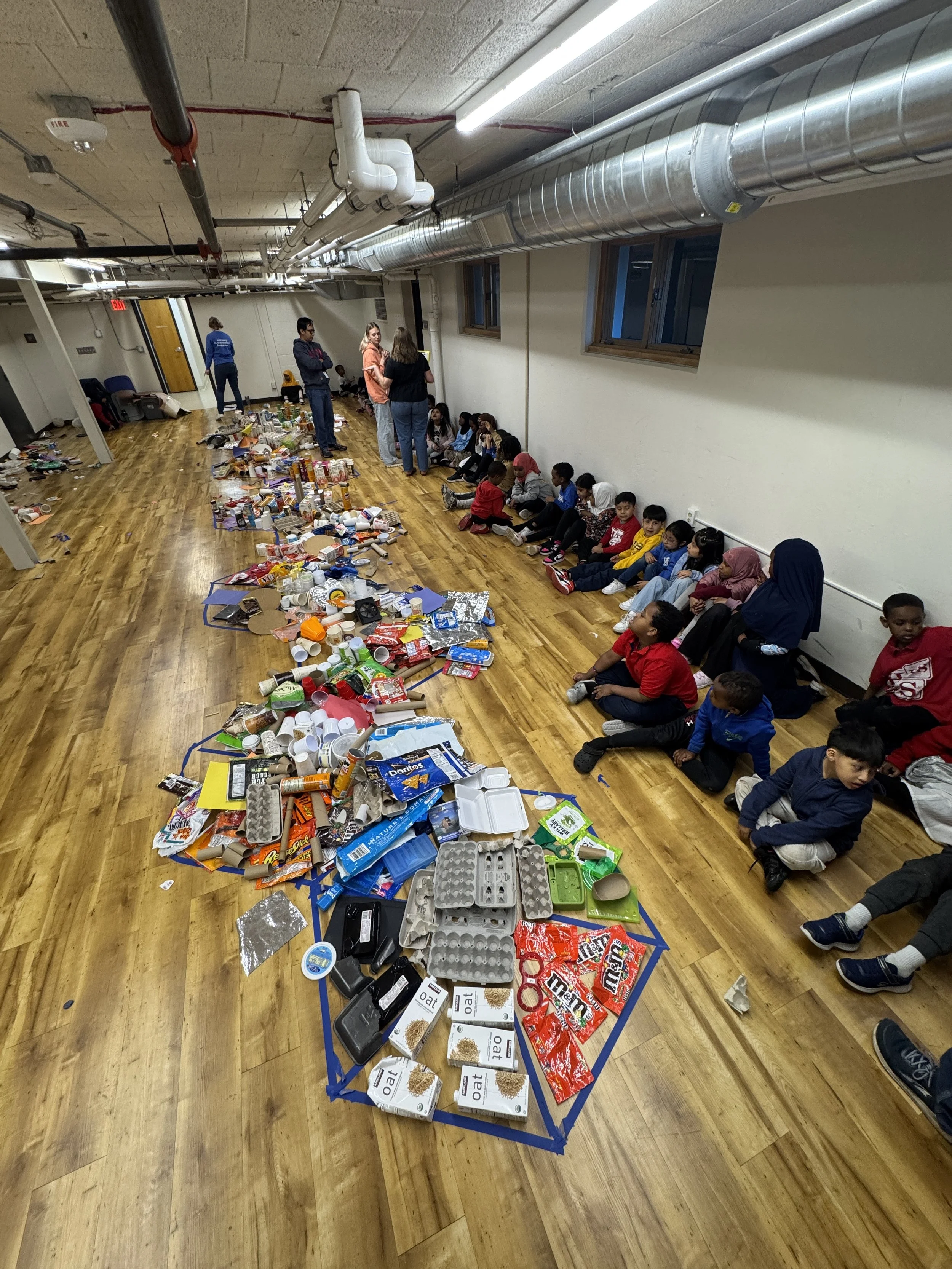
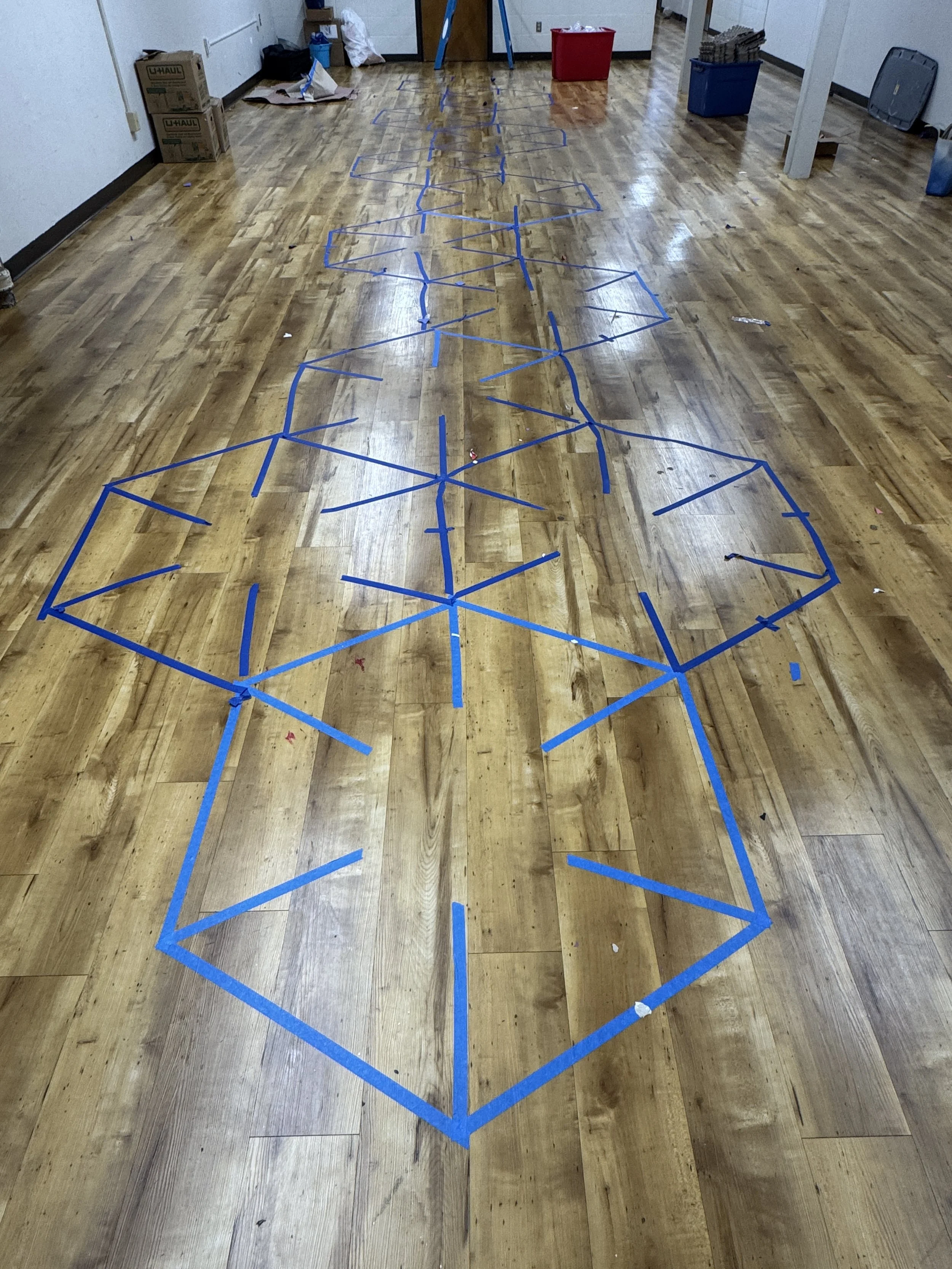
First grade completed their composition first, then helped us remove and reorganize the materials for Kindergarten. The primary challenge with this age of students is enthusiasm! Visual coherence started to give way at the half-way point in favor of piling more materials-on. Organization will be key to pursuing this sort of project with this age group. Out of an abundance of caution and due to our tight schedule, we left the tape pattern intact for the Kindergarden students to re-use. Emptied as it is above, you can see what a good job the students did making the pattern!
I couldn’t be more pleased with what this Minnesota State Arts Board Arts Experience Grant contributed to my on-going collaboration with Hennepin Schools. I am so grateful to the people of Minnesota, the panel who funded this grant, the arts board and all my collaborators for another successful year working with the amazing youth of Minnesota!